Why Phoenix’s Sealed Summer Homes Make Smoke and CO Detector Placement More Critical Than Ever
 Jessica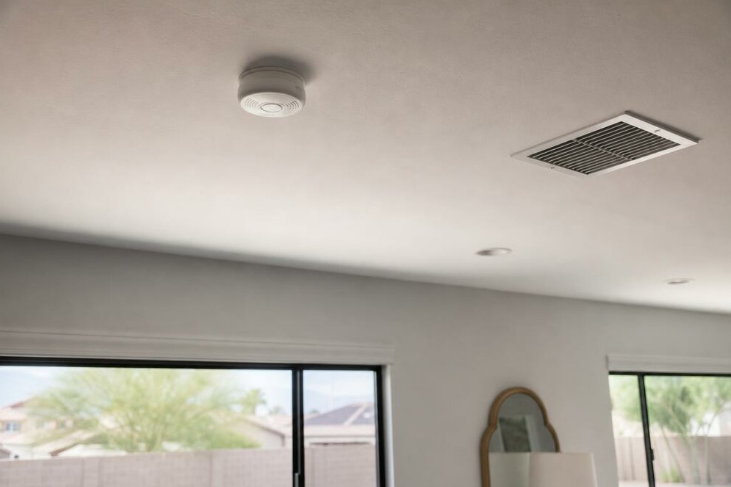
Phoenix summers are brutal. Homeowners across the Phoenix Valley seal up their homes tight, running the AC around the clock to escape the heat. That is smart for your energy bill. But it also means smoke, carbon monoxide, and other dangerous gases have nowhere to go. Where you place your smoke and CO detectors in a sealed home matters more than most people realize. Penguin Air, Plumbing & Electrical, a Phoenix-based home services company founded in 2011 and rated A+ by the BBB, has serviced and installed detectors in thousands of these energy-efficient Valley homes and knows this issue well.
Why Does a Sealed Phoenix Home Change the Rules for Smoke and CO Detectors?
Sealing a home tight for summer makes perfect sense in the Valley. But that same airtight envelope changes how smoke and carbon monoxide move through living spaces, and standard detector placement rules were never written with these homes in mind.
Homes built after 2000 in neighborhoods like Ahwatukee, Laveen, and Surprise were designed for energy efficiency. Low-e windows, sealed ductwork, and tight building envelopes cut natural air infiltration to very low air-change rates. Older construction leaked air constantly, and the “one detector per floor” rule was built around that reality. Drafts and gaps kept air moving, diluting gases and carrying smoke toward detectors. A low-infiltration home does none of that.
What Makes Sealed Homes More Dangerous for CO and Smoke Buildup?
In a tight-envelope home, CO from a malfunctioning furnace or water heater has nowhere to go, so it pools. Smoke from a kitchen fire behaves differently than it would in a 1970s ranch house. Placement decisions that seemed routine in older builds become genuinely consequential here.
Most homeowners picture smoke rising straight to the ceiling. In an airtight home with ceiling fans or return-air vents running, smoke can travel horizontally before it rises. A detector placed only at ceiling level in a hallway may not trigger until smoke has already spread into adjacent bedrooms.
Carbon monoxide is nearly the same density as air, so it distributes evenly through a room rather than pooling near the floor. That means CO from a cracked heat exchanger, a backdrafting water heater, or a malfunctioning gas range can reach dangerous concentrations in a bedroom well before a single hallway detector picks it up.
How HVAC Systems Play a Role
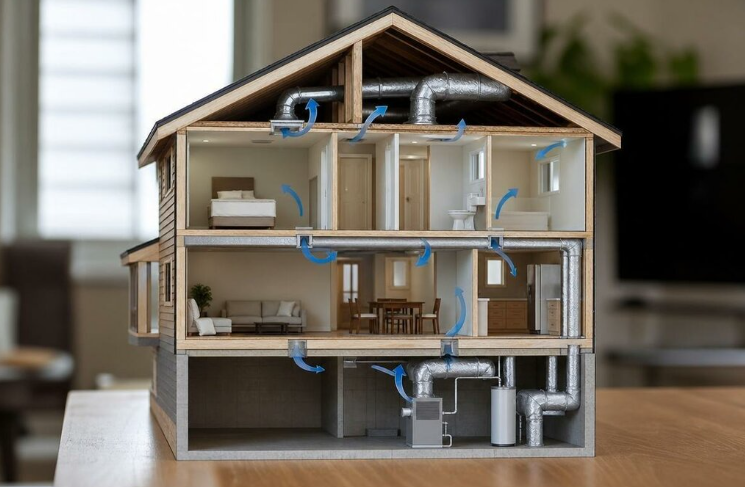
In the Greater Phoenix area, air handlers run nearly every month of the year. Return-air ducts typically pull from hallways and common areas, then push conditioned air throughout the house. If a combustion source introduces CO near a return duct, the air handler can distribute it through every room faster than natural diffusion ever would.
Placing detectors only at the return-air source misses downstream rooms where concentrations can quietly climb. Bedrooms at the far end of a duct run, especially in larger Chandler and Goodyear floor plans, are particularly vulnerable. Good placement in an energy-efficient home starts with mapping the home’s HVAC layout, not just following the minimum code requirement. Smoke and CO detector installation from Penguin Air, Plumbing & Electrical accounts for duct runs and return-air paths specific to each home.
Testing, Maintenance, and When to Replace Detectors
How Often to Test in a Phoenix Home
The NFPA recommends monthly testing for every home. Sensors run under thermal stress for months at a stretch in Phoenix, and a sensor that works in October may not perform the same after a long, sealed summer. The monthly test procedure: press and hold the test button until the alarm sounds, confirm every interconnected unit in the home triggers as well, gently vacuum the detector cover using a soft brush attachment to clear desert dust from ionization sensors, and flip the unit over to check the manufacture date printed on the back.
Desert dust clogs ionization sensors faster than most national guidelines account for. A quick vacuum each month keeps readings accurate.
Battery Tips for Extreme Heat Climates
Standard alkaline batteries drain faster in heat. In Mesa, Tempe, and other Valley communities, attic heat radiates into upper-floor ceiling spaces year-round, pushing battery drain well beyond the standard once-a-year replacement schedule. Lithium batteries handle high-temperature environments better than alkaline. Sealed 10-year lithium battery detectors are a practical upgrade for any Phoenix home, though the manufacturer label should always be checked to confirm that specific unit permits lithium batteries.
When to Replace Smoke and CO Detectors
Replacement intervals are straightforward: smoke detectors every 10 years, and CO detectors every 5 to 7 years per the manufacturer label. A constant chirp after a fresh battery swap is almost always an end-of-life signal, not a low-battery warning. Phoenix dust can degrade sensors faster than the national average, so a chirping unit should not be assumed to just need another battery. Writing the installation date on the back of each unit with a permanent marker removes all guesswork at replacement time.
Frequently Asked Questions
How many smoke and CO detectors does a typical home actually need?
At minimum, one detector on every level of the home, one inside every bedroom, and one in the hallway outside each sleeping area. A long hallway with bedrooms at both ends often needs two detectors, since CO guidelines generally call for coverage within about 10 feet of each bedroom door.
How far should a CO detector be from a furnace or water heater?
Most manufacturer guidelines recommend placing CO detectors at least 5 to 15 feet away from fuel-burning appliances. Placing one too close can trigger false alarms from normal combustion byproducts during startup.
Why shouldn’t a detector be placed near a vent, window, or ceiling fan?
Airflow from vents, windows, and fans can dilute or redirect smoke and gas before it reaches the sensor, delaying detection. Manufacturers recommend keeping detectors clear of these airflow paths and away from dead air corners where the ceiling meets the wall.
Does a chirping detector always mean the battery is low?
Not necessarily. A chirp that continues after a fresh battery swap usually signals the unit has reached the end of its sensor life rather than a power issue, particularly in dusty climates where sensors degrade faster than average.
About Penguin Air, Plumbing & Electrical
Penguin Air, Plumbing & Electrical is a Phoenix Metro Area home services company founded in 2011, serving homeowners across the Greater Phoenix region with HVAC, plumbing, and electrical services. The company holds a BBB A+ Rating and has maintained BBB Accreditation since its founding year, along with a Business Ethics Award. From Surprise and Goodyear in the West Valley to Gilbert, Chandler, and Scottsdale in the East Valley, their licensed Arizona technicians work in the exact airtight, heat-stressed homes this article describes. Their office is located at 3710 E University Dr # 1, Phoenix, AZ 85034. Read More at https://designmode24.co/
Business Name: Penguin Air, Plumbing & Electrical
Address: 3710 E University Dr # 1, Phoenix, AZ 85034
Phone Number: (480) 525-5400
<iframe src=”https://www.google.com/maps/embed?pb=!1m18!1m12!1m3!1d3330.032773588283!2d-112.0015335!3d33.4223899!2m3!1f0!2f0!3f0!3m2!1i1024!2i768!4f13.1!3m3!1m2!1s0x872b0ee0168c3a39%3A0xbf0da35d2895aa6!2sPenguin%20Air%2C%20Plumbing%20%26%20Electrical!5e0!3m2!1sen!2sph!4v1782380273625!5m2!1sen!2sph” width=”600″ height=”450″ style=”border:0;” allowfullscreen=”” loading=”lazy” referrerpolicy=”strict-origin-when-cross-origin”></iframe>