 Jessica
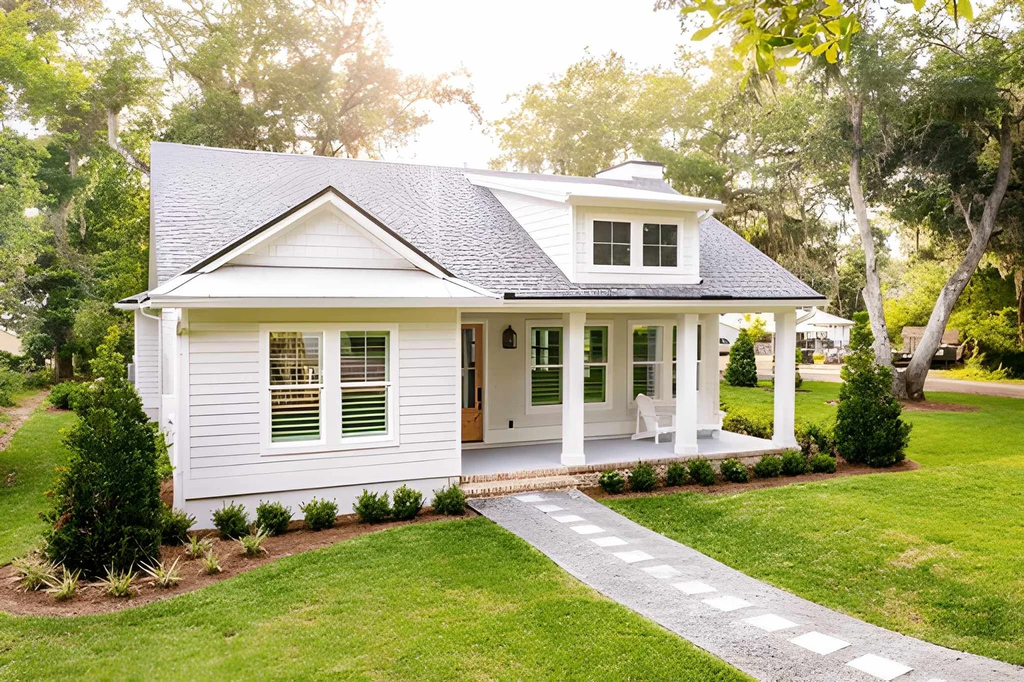
Most people assume transforming their home requires a renovation budget, weeks of disruption, and a complete overhaul of everything that isn’t working. That assumption keeps a lot of people living in spaces they don’t love for longer than necessary. The truth is more interesting — and considerably cheaper.
A single home design change, made in the right place, can shift how an entire space looks, feels, and functions. Not because one change fixes everything, but because certain decisions carry disproportionate weight. They affect how light moves through a room, how large or small a space feels, how furniture reads, how people feel when they’re inside it. These high-leverage changes don’t just improve one element — they recalibrate everything around them.
This guide identifies the specific home design changes with the highest transformative power: which ones work, why they work, how to identify which one your space needs most, and what to realistically expect from each. If your home feels off but a full renovation isn’t on the table, one of these changes is almost certainly the answer. The question is knowing which one to make first.
Why Some Home Design Changes Do More Than Others
Not all changes carry equal weight. Understanding which decisions influence the most variables helps you identify where a single move can do the work of many.
| Home Design Change | What It Affects | Transformation Level |
|---|---|---|
| Lighting overhaul | Mood, color perception, space size, time of use | Very High |
| Wall color change | Room size perception, furniture appearance, emotion | Very High |
| Ceiling treatment | Height perception, architectural character, acoustics | High |
| Rug size correction | Zone definition, furniture scale, warmth | High |
| Window treatment rehang | Natural light, ceiling height, room proportion | High |
| Furniture arrangement | Traffic flow, conversation, spatial logic | Medium-High |
| Statement focal point | Visual hierarchy, room identity, design confidence | Medium-High |
| Declutter and edit | Visual calm, perceived size, everything else improves | Very High |
The Home Design Changes That Transform Entire Spaces
1. Changing the Lighting Setup
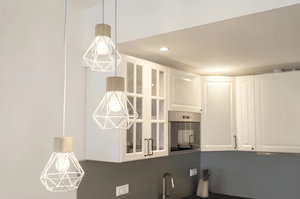
If there is one home design change that consistently does more than any other, it’s replacing a single overhead fixture with a layered lighting setup. This doesn’t mean buying expensive fixtures — it means adding sources.
A room with one ceiling light has flat, shadowless illumination that makes walls feel closer, colors look different from how they were chosen, and furniture look cheaper than it is. The same room with an overhead on a dimmer, a floor lamp in one corner, a table lamp at seated height, and a candle or accent light somewhere else reads as designed, warm, and significantly larger.
The color temperature matters as much as the number of sources. Warm white bulbs in the 2700K–3000K range make virtually every interior color look richer and every material look better. Switching from cool-white LEDs to warm-white ones costs under $20 and changes how the room feels at every hour of the day. Most people who make this change say they wish they’d done it years earlier.
2. Repainting — But Getting the Undertone Right
Paint is the most frequently attempted home design change and the one most often done wrong — not because people choose bad colors, but because they ignore undertones. A warm white and a cool white look similar on a chip and completely different on four walls under your specific lighting conditions. A gray with blue undertones in a north-facing room looks cold and unwelcoming. The same gray with green undertones reads as sophisticated and calm.
The transformative paint change isn’t just picking a color you like — it’s matching the undertone to your room’s light direction and your existing materials. South-facing rooms can handle cooler undertones because they receive warm direct light. North-facing rooms need warm undertones to compensate for cool, indirect light. Getting this right makes the room feel like the color was always meant to be there. Getting it wrong makes you repaint.
3. Correcting the Rug Size
An undersized rug is one of the most common home design problems in US living rooms — and one of the fastest to fix. A rug that only fits under the coffee table while the sofa and chairs float on bare floor disconnects all the furniture from each other and from the space. It looks like the rug was chosen for a different, smaller room.
The correct size puts the front legs of every seating piece on the rug minimum, and ideally brings all legs fully onto it. In most living rooms this means an 8×10 or 9×12 — significantly larger than what most people instinctively choose. The effect of the right-sized rug is immediate: furniture groups together visually, the seating area becomes a defined zone, and the room feels pulled together in a way that no accessory or décor addition can replicate.
4. Rehanging Window Treatments
Curtains hung just above the window frame make ceilings look low and windows look small. This is one of those home design details that seems minor until you change it — and then you can’t unsee how wrong the previous version was.
Hanging the curtain rod at ceiling height (or as close as possible) and extending it 6–12 inches beyond the window frame on each side does three things simultaneously: it makes the window look dramatically larger, makes the ceiling feel taller, and makes the whole room feel more considered and architecturally finished. The curtains themselves don’t need to change. Just the rod height and width. This is one of the few home design changes that is entirely free if you already own the curtains.
5. Removing the Wrong Furniture
Addition gets most of the attention in home design conversations. Subtraction does more work. A room with too much furniture — wrong scale, wrong placement, too many pieces competing for visual space — can’t be fixed by adding things to it. The furniture itself is the problem.
Identifying the one or two pieces that are creating the most visual noise, blocking traffic flow, or pulling the room’s scale in the wrong direction and removing them is often more transformative than any purchase. The room gets bigger. What remains looks better. The architecture of the space becomes visible again. This is the only home design change that costs nothing and frequently makes every other element in the room look like it improved.
6. Creating One Strong Focal Point
Rooms without a clear focal point feel directionless. The eye doesn’t know where to land, so it keeps scanning without settling — which reads as restless and unresolved even when everything in the room is individually fine.
The transformative home design change here is identifying or creating one strong focal point and arranging everything else in response to it. In a living room this is often the fireplace, a large piece of art, or a statement sofa wall. In a bedroom it’s the bed wall. In a dining room it’s the light fixture over the table. The right focal point for your room gives the eye somewhere to arrive and gives the room a reason to exist — and once it’s established, the rest of the decoration almost organizes itself around it.
Match the Change to Your Room’s Biggest Problem
| Room Problem | Most Transformative Single Change |
|---|---|
| Feels dark and heavy | Lighting overhaul — warm sources at multiple levels |
| Feels cold and unwelcoming | Repaint with warm undertone, add textile layers |
| Furniture looks disconnected | Correct rug size — bring all legs onto rug |
| Feels low and compressed | Rehang curtains at ceiling height |
| Feels cluttered and small | Remove one to two pieces of furniture |
| Feels generic and forgettable | Create one strong, deliberate focal point |
| Feels fine but flat | Add a single statement element — art, plant, fixture |
FAQ
Can one home design change really make a significant difference?
Yes — when the change targets the room’s primary problem. High-leverage changes like lighting, paint undertone, rug sizing, and curtain height affect multiple variables simultaneously rather than improving one isolated element. The right single change can make everything else in the room look better without touching it.
Which home design change has the best return on investment?
Lighting consistently delivers the highest return relative to cost. Switching to warm-toned bulbs and adding one or two lamp sources costs under $100 in most rooms and changes how the space looks and feels at every hour of the day. Curtain rehanging costs nothing at all if you already own the curtains.
How do I know which change my room needs most?
Stand in the doorway and ask one question: what bothers me first when I look at this room? The answer usually points directly at the highest-leverage problem. Dark and heavy points to lighting. Disconnected and floating points to rug size. Low and compressed points to curtain height. Cold and unwelcoming points to color temperature.
Does furniture arrangement count as a transformative home design change?
It can — particularly when furniture has been pushed against walls, which is the most common arrangement mistake. Pulling seating inward to create a conversation grouping, even in a small room, frequently transforms how the space feels without moving a single piece out.
Is decluttering a home design change?
Functionally, yes — and often the most effective one available. Visual noise suppresses everything that’s working in a room. Removing objects that aren’t contributing to the space allows what remains to read clearly and makes the room feel larger, calmer, and more designed without changing a single permanent element.
Bottom Line
One home design change can transform your entire space — but only if it’s the right change for what your specific room actually needs. Lighting affects the most variables for the least cost. Paint undertone determines whether a color works or fights the room. Rug size connects or disconnects everything. Curtain height changes room proportion without renovation. Furniture removal creates space no purchase can. A clear focal point gives the room direction.
The most important step isn’t picking the most popular change or the one with the most impressive before-and-after photos. It’s diagnosing what your room needs most and making that change first, completely, before adding anything else. One deliberate home design decision, made well, does more than ten scattered improvements that don’t address the real problem.
For more home design must visit https://designmode24.co/