 Jessica
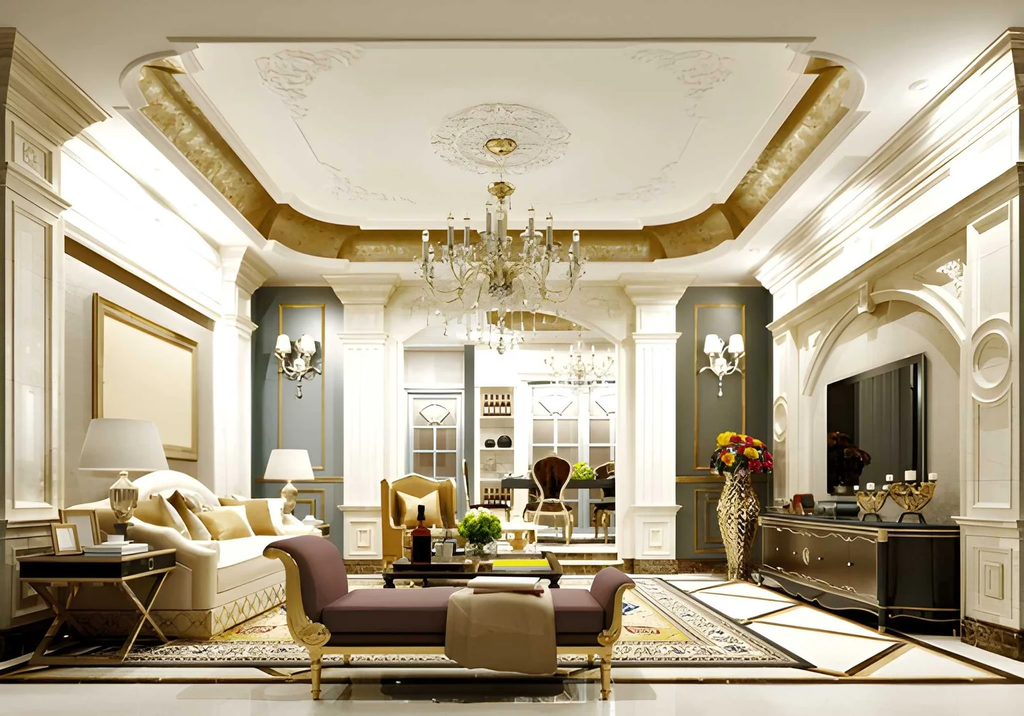
You’ve been in that house. The one where you walk through the front door and something stops you — before you can name what it is or why it’s working. You look around longer than you normally would. You ask questions about where things came from. You leave thinking about it. That reaction isn’t accidental, and it isn’t exclusively about money.
The home design choices that make guests stop and stare share a set of consistent characteristics that have very little to do with renovation budgets and everything to do with intention, contrast, and knowing where to concentrate visual energy. Most homes that get that reaction have one or two genuinely arresting elements — not twenty good ones. A ceiling treatment that changes the entire character of a room. A foyer that tells you exactly what kind of house you’ve walked into. A wall that makes you want to stand in front of it.
This guide breaks down exactly what creates that reaction: the specific home design decisions that generate immediate impact, why they work psychologically, which rooms benefit most, and how to introduce them at different budget levels without the result feeling forced or theatrical.
What Makes Home Design Genuinely Stop People?
The homes guests remember aren’t the ones that did everything right. They’re the ones that did one or two things unexpectedly, confidently, and well. Understanding the psychology behind that reaction makes it repeatable.
| Design Element | Why It Stops People | Where It Works Best |
|---|---|---|
| Unexpected ceiling treatment | Eye goes up — most rooms ignore this plane entirely | Entryway, dining room, living room |
| Strong, confident color | Commitment reads as sophistication | Accent wall, powder room, library |
| Oversized or unusual lighting | Fixture as sculpture, visible when off | Foyer, dining room, stairwell |
| Dramatic contrast | Light against dark, rough against smooth | Any room with a clear focal wall |
| Bespoke or one-of-a-kind elements | Signals curation, not catalogue shopping | Living room, primary bedroom |
| Architectural detail where none existed | Adds permanence and visual weight | Hallways, living rooms, dining rooms |
| Unexpected material in unexpected place | Creates the “what is that?” moment | Kitchen backsplash, bathroom floor |
Home Design Elements That Create Immediate Guest Impact
1. A Foyer That Declares Intent
The foyer is the only room in the house every guest experiences, and it’s the room most homeowners underinvest in. A foyer that’s merely functional — a place to put your keys and take off your shoes — misses the most valuable real estate in your home for creating a first impression.
The foyers guests remember do one thing boldly: a dramatic light fixture hung lower than expected, a single piece of large-scale art centered on the first wall you face, a floor in a material or pattern distinct from the rest of the home, or a paint color that’s darker and more confident than anything in the rooms that follow. Any one of these works. All of them together is too much. The home design principle here is commitment — one bold decision executed completely, rather than several tentative ones hedging against each other.
2. A Ceiling That Gets Treated Like a Surface
The ceiling is the only major surface in any room that goes entirely uncontested — no furniture in front of it, no objects breaking it up, nothing competing for attention. Yet most home design treats it as an afterthought: white paint, done. The homes that make guests look up have discovered what designers have always known: the ceiling is the most available canvas in the house.
Treatments that consistently generate the strongest reactions: painted in a deep, saturated color that’s several shades darker than the walls (a technique that compresses the room intentionally and creates intimacy rather than diminishing space); wallpapered with a botanical, geometric, or textural pattern; treated with wood slat or plank cladding that adds warmth and acoustic quality simultaneously; or given a coffered or tray detail that adds architectural permanence. The ceiling treatment that stops guests is almost always the one the homeowner was initially afraid to try.
3. One Room Painted in a Color That Means It
Safe paint colors rarely make guests stop. The home design choice that generates the strongest reactions is a room — particularly a powder room, library, or dining room — painted in a color so committed and so right for the space that it feels like the room couldn’t have been any other color.
Deep, saturated hues work here: forest green, navy, plum, oxblood, deep terracotta. Not as accent walls but as all four walls, ceiling included — the immersive approach that envelops rather than decorates. Powder rooms are the safest place to try this because their small scale makes commitment less expensive and the contained environment makes bold color feel curated rather than overwhelming.
4. Lighting That Functions as Sculpture
A light fixture guests notice when the light is off has done something that most fixtures never achieve: it’s become a piece of sculpture with a secondary function rather than a functional object with secondary aesthetics. This distinction is what separates statement lighting from decorative lighting.
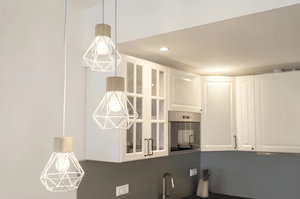
The fixtures that stop people are unusual in scale, form, or material: an oversized rattan pendant in a room full of clean lines, a cluster of hand-blown glass globes at varying heights over a dining table, an articulated metal chandelier in a stairwell that casts moving shadows at night. Scale matters enormously — most homeowners choose fixtures that are too small for the space, which reads as timid. A fixture that’s slightly too large for the conventional rule reads as confident and considered.
5. A Material Used Somewhere Unexpected
The home design moment that most reliably produces the “what is that?” question from guests is a material appearing somewhere they didn’t expect to find it. Unlacquered brass used as a kitchen countertop edge rather than hardware. Zellige tile on a fireplace surround rather than a backsplash. Fluted glass used as cabinet fronts rather than windows. Concrete on a bathroom wall rather than a floor.
The unexpectedness is the point. It signals that someone thought specifically about this space rather than selecting from a standard options menu. It creates the sense of curation — the feeling that every decision was deliberate — that is the underlying quality guests are actually responding to when they say a home feels special.
6. Architectural Detail That Wasn’t There Originally
Rooms that feel built rather than decorated have one quality in common: architectural detail. Molding, paneling, arches, niches, built-ins, coffered ceilings — these elements signal permanence and craft in a way that furniture and accessories can’t replicate because they’re part of the structure rather than placed within it.
The home design additions with the strongest impact-to-cost ratio: board-and-batten or shiplap paneling on a feature wall, picture rail molding installed at the correct height, an arched doorway created from a standard rectangular opening, or a built-in bookcase framing a fireplace or television. The right architectural detail for your home’s style adds a layer of character that guests register as expensive and considered even when the actual installation cost was modest.
Impact by Room: Where to Concentrate Design Energy
| Room | Highest-Impact Single Change | Guest Reaction It Creates |
|---|---|---|
| Foyer | Statement fixture or bold floor material | “This is going to be a great house” |
| Living Room | Architectural detail on focal wall | “Did this house always have that?” |
| Dining Room | Dramatic ceiling treatment + fixture | “I want to have dinner parties here” |
| Powder Room | Full immersive color, floor to ceiling | “I almost didn’t want to leave” |
| Kitchen | Unexpected material or backsplash choice | “I’ve never seen that before — I love it” |
| Primary Bedroom | Ceiling treatment or upholstered wall panel | “This feels like a hotel” |
| Stairwell | Large-scale art or sculptural fixture | “That stops you in your tracks” |
FAQ
What home design element makes the strongest first impression on guests?
The foyer, consistently. It’s the one space every guest passes through, and a foyer with one bold, committed design decision — an unusual fixture, a dramatic floor, a statement art piece — sets the expectation for everything that follows. Guests decide how they feel about a home within the first thirty seconds.
Do you need a large budget for home design that impresses guests?
No. The homes guests remember most are rarely the most expensive ones — they’re the most intentional ones. A powder room painted an unexpected deep color costs under $100 in materials and produces stronger reactions than a renovated kitchen with safe, predictable choices at ten times the cost.
What ceiling treatments make the most impact?
Deep paint color applied to the ceiling (same color as walls or several shades darker), wallpaper with a botanical or geometric pattern, wood slat cladding, and coffered or tray detail all produce strong guest reactions. The common thread is that they treat the ceiling as a designed surface rather than an afterthought.
How do you make a home feel curated rather than decorated?
Curation comes from restraint and specificity — fewer things, chosen with clear intention, placed with deliberate logic. A curated home has one strong focal point per room, materials that feel selected rather than defaulted to, and a visible point of view that runs through the whole space.
What lighting choices make the strongest impression?
Fixtures that function as sculpture when off — unusual in scale, form, or material — consistently generate the strongest reactions. Oversizing relative to the conventional rule (a fixture slightly too large for the space) reads as confident rather than timid and makes a significantly stronger impression than correctly-sized conventional fixtures.
Bottom Line
Home design that makes guests stop and stare isn’t about spending more than everyone else or following the latest trends more faithfully. It’s about committing to one or two genuinely bold decisions per space and executing them without hedging. A foyer that declares intent. A ceiling treated as a designed surface. A room painted in a color that means it. A fixture that’s sculpture first. A material used somewhere unexpected. Architectural detail that adds permanence.
The homes guests can’t stop talking about on the drive home are the ones where someone made a decision and committed to it completely — where the design has a point of view visible enough to provoke a reaction. That confidence is learnable. It starts with choosing one room, identifying its highest-leverage surface, and doing something with it that you would normally talk yourself out of. The results are almost always worth the nerve it took to try.
Must visit https://designmode24.co/ for home design.