 Jessica
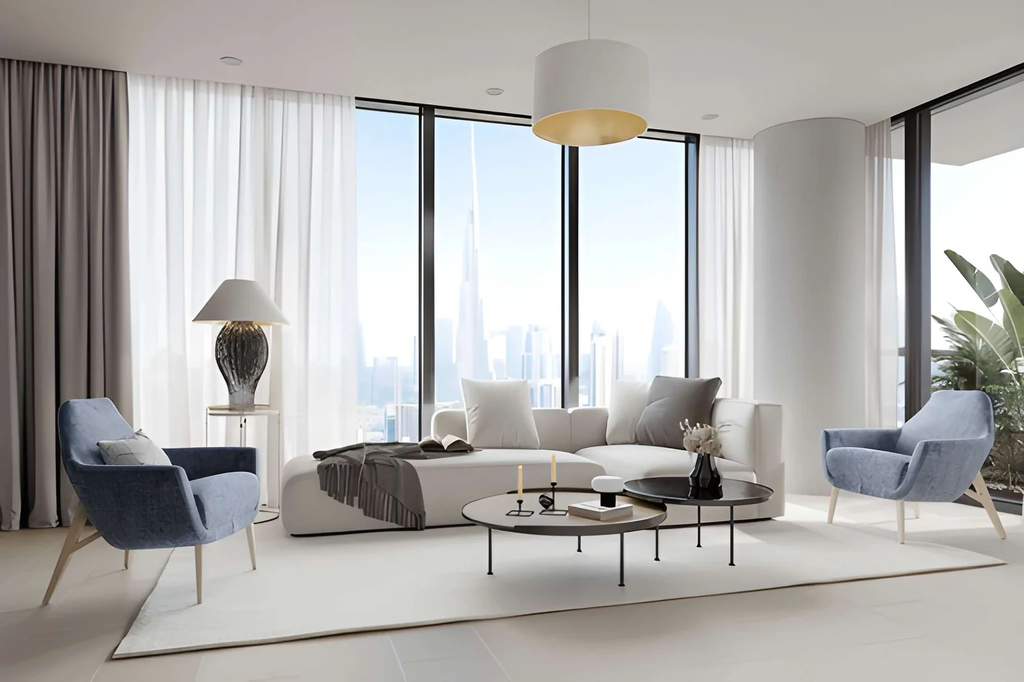
Most homeowners reach a point where they’ve bought enough furniture to fill a room but the room still doesn’t feel right. The sofa is comfortable. The coffee table is fine. The pieces individually aren’t bad — but together, something isn’t working. The room feels crowded, or cold, or oddly formal, or just permanently unfinished regardless of what gets added to it.
The problem is almost never taste. It’s almost always function — specifically, whether the furniture in a room is actually serving the space it’s in or quietly working against it.
Furniture that doesn’t work for a space does predictable damage: it shrinks perceived room size, blocks natural traffic flow, creates visual imbalance, and makes a room feel assembled by accident rather than arranged with intention. None of that is obvious when you’re standing in the middle of it every day. It becomes obvious the moment someone with fresh eyes walks in.
This article gives you the diagnostic framework to evaluate your own furniture objectively — scale, proportion, placement, function, and visual weight — and the specific corrections that fix the most common problems US homeowners encounter.
The Real Question: Is Your Furniture Serving the Room or Just Occupying It?
There’s a difference between furniture that fills a space and furniture that works in one. Filling is passive — you put things in a room until it doesn’t look empty. Working is active — every piece earns its place by contributing to how the room functions and feels.
The test is straightforward: if you removed a piece of furniture, would the room work better or worse? If the honest answer is “better,” the piece isn’t working for the space regardless of how much it cost.
| Furniture Role | What It Should Do | Sign It’s Not Working |
|---|---|---|
| Primary seating | Anchor the room, define the conversation zone | Pushed against walls, faces nowhere specific |
| Coffee table | Serve the seating group at the right height and reach | Too small, too far, or blocks traffic |
| Storage pieces | Contain and organize without dominating | Overloaded, wrong scale, visually heavy |
| Accent chairs | Add seating flexibility and visual balance | Orphaned in corners, wrong scale |
| Side tables | Functional surface at arm reach | Too tall, too short, or absent entirely |
| Area rug | Define the zone and ground the group | Too small, wrong placement, no furniture on it |
How to Tell if Your Furniture Is Wrong for Your Space
Scale Is the Most Common Problem
Furniture that’s wrong in scale for a room is the single most widespread issue in US homes — and the hardest to self-diagnose because you’ve stopped seeing it. An oversized sectional in a small living room makes the room feel like a furniture showroom. An undersized loveseat in a large room makes it feel unoccupied and cold.
The proportional rule most designers use: the primary seating piece should occupy roughly two-thirds of the wall it faces or sits against. Not more, not less. More and it dominates. Less and it floats.
| Room Size | Appropriate Sofa Size | Common Mistake |
|---|---|---|
| Small (under 120 sq ft) | 72–84″ sofa or loveseat | Full sectional that blocks all flow |
| Medium (120–200 sq ft) | 84–96″ sofa | Loveseat that leaves room feeling sparse |
| Large (200+ sq ft) | Sectional or sofa + accent chairs | Single small sofa that gets lost |
| Open plan | Furniture grouped, not spread | Pieces scattered across too much floor |
Placement Tells You More Than the Pieces Themselves
A room with decent furniture in wrong positions will always underperform a room with modest furniture in right ones. The most common placement errors:
Everything against the walls. This is the default instinct and almost always the wrong choice. It creates a perimeter arrangement where people sit across from each other at conversation-killing distances. Floating furniture inward — even 12 to 18 inches — transforms how a room feels and functions.
No clear focal point orientation. Furniture should face something: a fireplace, a window, a piece of artwork, a television. When seating doesn’t orient toward anything, the room feels directionless.
Traffic flow ignored. A minimum 30 to 36 inches of clearance is needed for primary pathways through a room. Less than that and the furniture arrangement feels like an obstacle course rather than a living space.
Visual Weight Imbalance
Visual weight is how heavy a piece of furniture looks, regardless of its actual mass. Dark colors, solid forms, and heavy materials carry more visual weight than light colors, open frames, and reflective surfaces. A room where all the visual weight is concentrated on one side feels unstable — like something is about to tip over.
| High Visual Weight | Low Visual Weight | Balancing Approach |
|---|---|---|
| Dark upholstery | Light linen or cotton | Mix across the seating group |
| Solid wood storage | Open shelving or glass | Alternate closed and open storage |
| Large sectional | Accent chairs with visible legs | Pair heavy anchor with lighter secondary pieces |
| Dark area rug | Light or patterned rug | Offset with lighter furniture above |
| Upholstered bed frame | Wooden or metal frame | Balance with lighter bedside pieces |
Is Your Furniture Doing Multiple Jobs When It Should Be Doing One?
Multi-function furniture sounds efficient. In practice, furniture that’s trying to do too many things often does none of them well — and creates visual confusion in the process.
A dining table being used as a home office surface, a bedroom chair being used as a clothes holder, a coffee table being used as dining overflow — these are signs that the furniture in the room isn’t matched to the room’s actual function. The solution isn’t always buying more furniture. Sometimes it’s being honest about what the room is actually for and eliminating pieces that serve functions that should happen elsewhere.
When to Replace vs. Reposition
Not every furniture problem requires new purchases. The decision tree is simpler than most homeowners make it:
| Problem | Reposition First? | Replace When |
|---|---|---|
| Room feels cramped | Yes — remove or float pieces | Scale is genuinely wrong for the space |
| Traffic flow blocked | Yes — reroute furniture arrangement | Layout can’t be solved without different pieces |
| Visual imbalance | Yes — redistribute pieces across room | Weight mismatch can’t be corrected with placement |
| Wrong scale | No — scale can’t be fixed by moving | Piece is too large or small regardless of position |
| Functional mismatch | Sometimes — reassign to correct room | Piece serves no useful function anywhere in the home |
| Worn or deteriorating | No | Condition affects both function and appearance |
Frequently Asked Questions
How do I know if my furniture is the wrong scale for my room?
Photograph the room from the doorway and look at the image on your phone. Scale problems that are invisible when you’re standing in a space become obvious in a photograph. If a piece looks too large or too small in the photo, it is too large or too small in the room.
Should all furniture in a room match?
No — and perfectly matched furniture sets often make rooms feel like showrooms rather than homes. What should match is scale, visual weight, and general color relationship. Mixing materials, eras, and styles within those parameters produces rooms that feel personal and designed rather than catalogued.
How much space should there be between furniture pieces?
Between a sofa and coffee table: 14 to 18 inches. Between facing sofas or chairs: 3.5 to 4 feet. Primary traffic paths through a room: 30 to 36 inches minimum. These aren’t suggestions — they’re the clearances that make furniture feel functional rather than obstructive.
What’s the fastest way to make furniture work better without buying anything new?
Pull everything away from the walls and create a floating arrangement oriented toward a focal point. This single repositioning change fixes more rooms than any other intervention, costs nothing, and takes an afternoon.
When is it worth investing in new furniture vs. working with what you have?
Work with what you have when the problem is placement or arrangement. Invest in new furniture when the scale is genuinely wrong for the space, when a piece is deteriorating in ways that affect appearance or function, or when the room is missing a category entirely — no proper anchor seating, no rug to define the zone, no lighting beyond overhead fixtures.
The Bottom Line
Furniture that doesn’t work for a space is one of the most common and correctable problems in US homes. The diagnostic is simple: does each piece earn its place by contributing to how the room functions and feels, or is it just occupying floor space?
Start with scale — photograph the room and look honestly at proportions. Then address placement — float furniture inward, orient toward a focal point, clear the traffic paths. Resolve visual weight imbalance by redistributing pieces rather than adding new ones.
Most rooms don’t need more furniture. They need their existing furniture to be in the right place, in the right proportion, doing the right job.
Must visit our webits https://designmode24.co/ for working furniture.