 Jessica
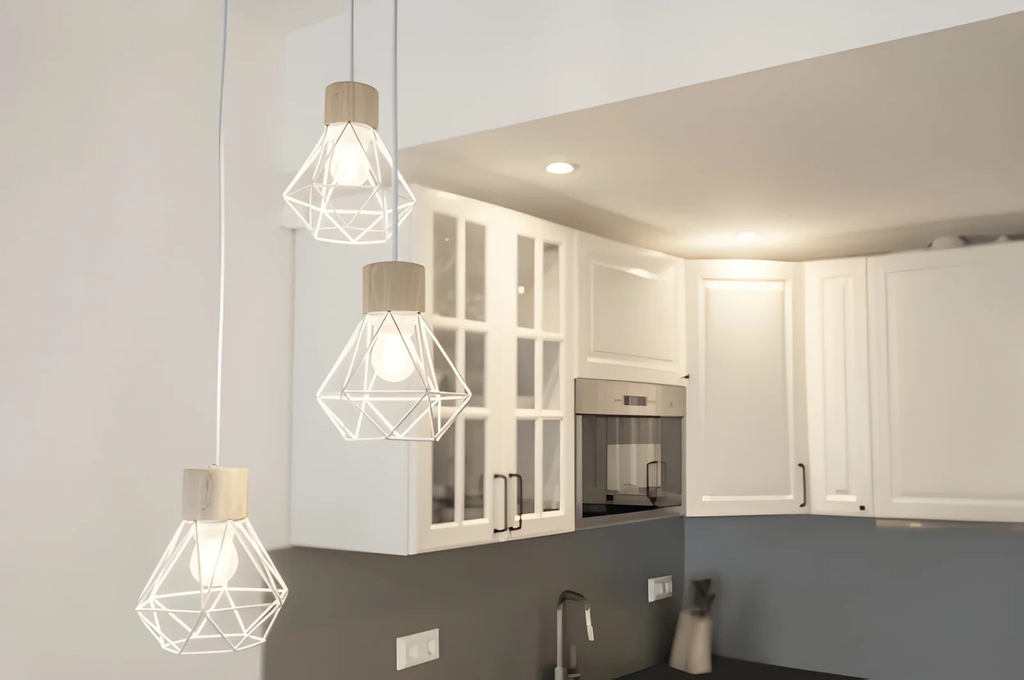
Walk into almost any professionally designed kitchen, dining room, or entryway in the US and you’ll find pendant lighting. It shows up in staged homes, in design publications, and in the spaces that consistently receive the most admiring comments from guests. Its presence in well-designed spaces is so consistent that it’s begun to function as a shorthand for “someone made a deliberate design decision here.”
That prevalence raises a legitimate question for US homeowners working within real budgets: is pendant lighting actually delivering something that justifies the extra cost, or has it become a design convention that people follow because everyone else does?
The honest answer is that pendant lighting earns its investment in specific applications — and doesn’t in others. It’s not universally superior to flush mounts and recessed fixtures. It’s significantly superior in the situations where its particular combination of visual presence, directional illumination, and spatial definition does something that no other fixture type can replicate at comparable cost. Understanding which situations those are — and which applications genuinely don’t justify the expense — is what this article covers.
What Pendant Lighting Actually Does That Other Fixtures Don’t
Before evaluating whether pendant lighting is worth the investment, it helps to understand precisely what it offers that ceiling fixtures and recessed lighting don’t.
| What Pendant Lighting Provides | What Standard Fixtures Provide |
|---|---|
| Visual presence — reads as a design decision | Functional illumination without design contribution |
| Directional light brought closer to work/dining surface | Even overhead illumination from ceiling height |
| Defines spatial zones in open-plan layouts | Illuminates without zone differentiation |
| Creates human-scale focal point | Light source at architectural rather than human scale |
| Contributes to layered lighting depth | Single-source lighting without layering |
| Adds sculptural element to architecture | Invisible or minimal visual contribution |
The zone-definition function is particularly significant in US homes, where open-plan layouts — kitchen into dining into living — have been the dominant residential design for decades. In open plans, pendant lighting over an island or dining table is often the primary means of communicating “this area is different from that area” without physical partition. That’s a function no other fixture type serves as effectively.
Where Pendant Lighting Is Genuinely Worth the Investment
Over the Kitchen Island
This is the application where pendant lighting delivers its clearest return — functionally and visually. An island without pendants is a work surface with inadequate dedicated task lighting. An island with correctly scaled and positioned pendants has both targeted illumination and a design anchor that makes the kitchen read as intentionally finished.
The functional case: pendant lighting hung 30 to 36 inches above the island countertop provides task lighting from a height that eliminates the shadowing problem that overhead recessed lighting creates — where the homeowner’s body blocks the overhead light while working at the counter. Pendants at island height put light where the work happens.
The design case: kitchen islands are the visual center of most US open-plan kitchens. Pendant lighting over them acknowledges that centrality and provides the focal element that keeps the kitchen from reading as an undifferentiated open space.
| Island Length | Number of Pendants | Pendant Diameter | Spacing |
|---|---|---|---|
| Under 4 feet | 1 centered | 12–16 inches | Centered |
| 4–6 feet | 2 | 12–16 inches | Equal thirds |
| 6–8 feet | 2–3 | 14–18 inches | Equal intervals |
| 8–10 feet | 3 | 14–20 inches | Equal thirds |
| Over 10 feet | 3–4 | 16–24 inches | Equal intervals |
Over the Dining Table
Dining table pendant lighting — or a chandelier serving the same function — is one of the oldest and most validated applications in residential design. It works for practical and psychological reasons simultaneously.
Practically: bringing light closer to the table surface makes food look more appealing, faces more flattering (eliminating the unflattering downward shadows that overhead recessed lighting creates), and the dining experience more intimate. A pendant over a dining table on a dimmer circuit allows the same space to function as a bright, functional dining area at lunch and a warm, intimate dinner setting in the evening.
Psychologically: a pendant or chandelier over a dining table creates a “room within a room” effect in open plans. It signals that this surface and the space around it have a specific purpose — which is precisely the kind of spatial definition that open plans struggle to create without physical walls.
In Entryways and Stairwells
Pendant lighting in entryways and over stairwells serves a different purpose than in kitchens and dining rooms: it creates a first impression and establishes the home’s design tone before a guest has seen any other element.
A well-chosen pendant in an entryway communicates that design decisions were made in this home — that the space was thought about. It also provides the vertical visual interest that entryways typically lack, drawing the eye upward in spaces that are often tall but narrow.
Where Pendant Lighting Is NOT Worth the Investment
Honest evaluation requires naming where pendant lighting underperforms its cost and where other fixtures serve better.
| Application | Why Pendant Lighting Underperforms | Better Alternative |
|---|---|---|
| Low-ceiling spaces (under 7.5 feet) | Creates headroom problem, can feel oppressive | Flush mount or semi-flush |
| Bathrooms (except above double vanity) | Single pendant creates uneven vanity illumination | Side-mounted sconces |
| Bedrooms (general illumination) | Creates glare when lying down | Semi-flush or recessed with dimmer |
| Hallways (standard height) | Often impractical clearance unless specifically designed | Flush mount or wall sconces |
| Rooms with non-standard furniture arrangements | Pendant tied to one position in flexible space | Recessed lighting with dimmer |
The ceiling height requirement is the most important pendant lighting constraint. A pendant requires a minimum of 7 feet of clearance between the floor and the bottom of the fixture in any walkable area — more in high-traffic zones. In homes with 8-foot ceilings (the US builder standard), pendant lighting over dining tables and islands works because those areas aren’t primary walking paths. In low-ceilinged spaces where every inch counts, pendant lighting creates a problem it doesn’t solve.
The Investment Evaluation: What You’re Actually Paying For
Pendant lighting spans a wide price range, and not all of that range is equally justified.
| Price Range | What’s Available | When Worth It |
|---|---|---|
| $40–$100 | Basic functional pendants, limited materials | Budget renovations, short-term rentals |
| $100–$250 | Quality entry-level, good material range | Most US residential applications — strong value zone |
| $250–$600 | Design-forward, quality materials, longer lifespan | Primary kitchen/dining in a home you own long-term |
| $600–$1,500 | Statement pieces, artisan materials | Entryways and dining rooms where the fixture is the focal point |
| Over $1,500 | Custom and luxury — diminishing functional return | Investment in a signature design element only if genuinely meaningful to you |
The strong value zone for most US homeowners is $100 to $250. This range provides quality materials, good design, and appropriate longevity without the significant premium of designer pieces whose additional cost is often brand rather than performance.
The specific things worth paying more for: quality electrical components (cheaper pendants can have wiring issues), metal quality in the fixture body (chrome plating peels on cheap fixtures), and shade or globe quality (thin glass or cheap fabric shades look inexpensive immediately regardless of the fixture’s other qualities).
Pendant Lighting and Resale Value: What US Real Estate Data Shows
For homeowners considering pendant lighting as part of a pre-sale renovation, the investment calculus includes resale impact. The data here is more nuanced than general renovation ROI research suggests.
Pendant lighting in kitchens and dining rooms consistently appears in the “high-impact visual updates” category that real estate stagers and agents recommend before listing. Its contribution to buyer perception — the feeling that a home has been designed rather than defaulted — is documented in buyer response surveys.
The caveat: highly distinctive or trend-specific pendant choices can date a kitchen’s appearance quickly. The highest-value pendant choices for resale are clean, timeless forms in materials that don’t have strong trend associations — aged brass, matte black, or brushed nickel in geometric or organic forms that don’t telegraph a specific design moment.
Frequently Asked Questions
Is pendant lighting worth it over a kitchen island?
Yes — more consistently than almost any other pendant lighting application. The functional benefit (task lighting at counter height without body-shadow interference) and the design benefit (focal element that anchors the kitchen’s visual center) together produce more return than the investment in most US kitchen configurations. It’s the pendant lighting application with the clearest and most documented ROI.
How many pendant lights over a kitchen island?
Scale proportionally to island length: one pendant for islands under four feet, two for four to six feet, two to three for six to eight feet, three to four for longer. The pendants should be spaced equally across the island’s length with roughly equal margins at each end. Over-pendant-ing an island — too many or too large — is the most common installation error.
Does pendant lighting increase home value?
In kitchens and dining rooms, yes — as part of a broader update that signals design investment. In isolation, a pendant swap without other updates has limited impact on appraised value. The contribution is primarily to buyer perception and offer motivation rather than to formal appraisal value, which makes it most valuable in competitive markets where emotional response drives offers above appraised value.
What size pendant is right for a dining table?
The pendant or chandelier width should be approximately 50 to 75 percent of the table width. A 48-inch dining table suits a fixture 24 to 36 inches in diameter. The fixture should hang 30 to 36 inches above the table surface with standard 8-foot ceilings, adjusted upward 3 inches per additional ceiling foot above 8 feet.
Is pendant lighting a trend that will date quickly?
Pendant lighting as a category has appeared consistently in residential design for over a century — it’s not a trend. Specific pendant styles within the category do date: the Edison bulb cage pendant peaked around 2015 and now reads as trend-specific. Cleaner forms in quality materials — simple geometric shapes, quality blown glass, well-made metalwork — have demonstrated longer aesthetic longevity and carry less obsolescence risk.
The Bottom Line
Pendant lighting is worth the investment in the applications where its combination of visual presence, directional illumination, and spatial definition does something that other fixtures can’t replicate: over kitchen islands, over dining tables, and in entryways where a first impression matters.
It’s not worth the investment in low-ceiling spaces, bathrooms, flexible-use rooms, or anywhere the practical constraints of a hanging fixture create problems rather than solve them.
Within the applications where it works, the value zone is $100 to $250 for most US homeowners — enough to get quality materials and good design without paying the designer premium that delivers brand rather than performance. Scale correctly, hang at the right height for your ceiling, choose timeless forms over trend-specific ones, and pendant lighting will still look right in the room in ten years.
For pendant lighting ideas must visit https://designmode24.co/