 Jessica
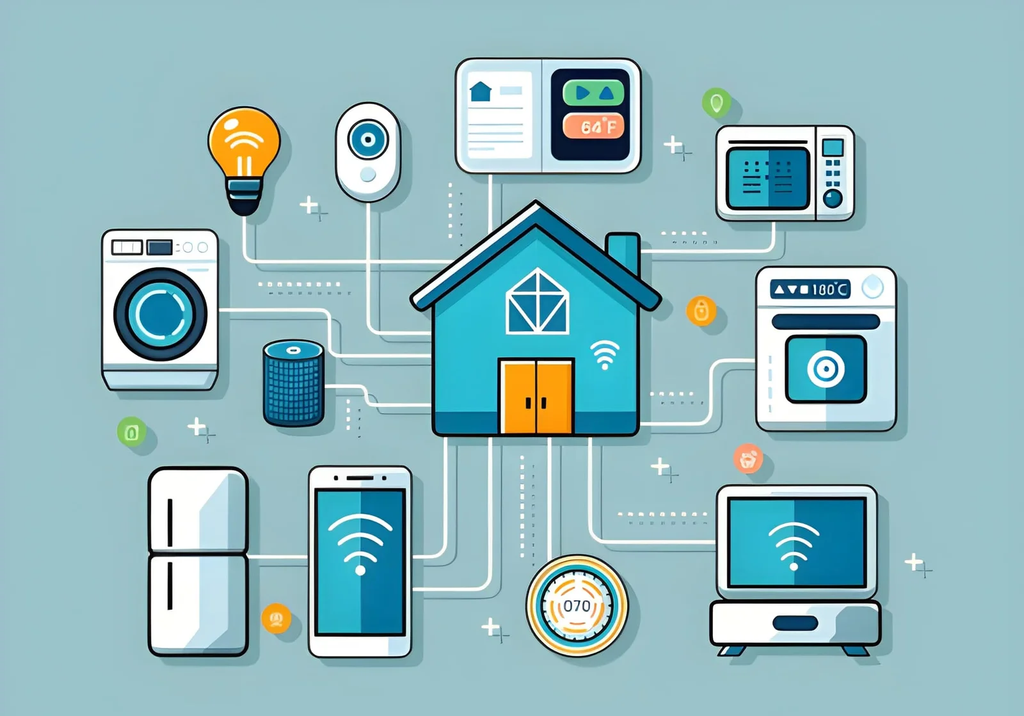
Your oven preheats when your phone says you are ten minutes from home. Your washer waits for cheaper electricity. Nobody typed a command. So how do connected appliances communicate with each other? In short, they speak a shared language over a shared network, and something nearby, such as a hub, a router, or a cloud server, helps them find one another. When it works, it feels like magic. When it fails, you get a spinning wheel and a dishwasher that ignores your phone. Knowing the mechanics helps you buy compatible devices and fix problems yourself. This guide splits the process into layers: the radio that carries signals, the network that addresses them, and the language that gives them meaning. You will find a quick answer, a protocol comparison table, a table of the three communication paths, and an offline test that shows how your own home is wired. No engineering degree is needed.
How Do Connected Appliances Communicate With Each Other?
Connected appliances communicate by sending small data messages over a shared network, using Wi-Fi, Thread, Zigbee, Z-Wave, or Bluetooth as the radio link. A common language such as Matter gives those messages meaning, while a hub, router, or cloud service connects devices that cannot talk directly.
What Are the Three Layers?
Think of the postal system. The radio is the road, the network address is the street number, and the application language is what the letter says.
Matter tells devices how to communicate, while Thread is one way for them to connect. Matter devices communicate using standard IPv6 over your existing local network and can be controlled without an internet connection or cloud service. That local path is why a Matter light switch can often still work when your internet is down.
Which Technology Does What?
| Technology | Role | Strength | Weakness |
|---|---|---|---|
| Wi-Fi | Radio and network | High bandwidth, no extra hub | Uses more power |
| Thread | Low-power mesh | Suits battery sensors, devices relay for each other | Needs a border router |
| Zigbee | Low-power mesh | Mature lighting and sensor range | Usually needs a hub |
| Z-Wave | Low-power mesh | Separate radio band, less crowding | Needs a hub, smaller range of products |
| Bluetooth LE | Short-range link | Easy setup | Short distance |
| Matter | Common language | Cross-brand control | Not every appliance type is supported yet |
Thread is typically used for low-power devices like sensors and locks, while Wi-Fi suits high-bandwidth devices.
What Are the Three Communication Paths?
| Path | How It Works | Works Without Internet? | Example |
|---|---|---|---|
| Direct local | Devices message each other over the home network | Yes | Matter switch controlling a Matter bulb |
| Through a hub | A hub translates between protocols | Usually | Zigbee sensor, hub, then speaker announcement |
| Through the cloud | Each device reports to its maker’s server, which relays commands | No | Two brands linked only through their phone apps |
The cloud path is the slowest and the most fragile, because one outage or discontinued service breaks the link.
How Can You Test Your Own Home?
This offline test shows which devices depend on the internet.
- Unplug the internet cable from your router, but leave Wi-Fi running.
- Trigger a routine, such as a motion sensor turning on a light.
- If it still works, that link uses a local path.
- If it fails, it depends on the cloud.
- Write down every failing device. These are your weak points.
- Reconnect the internet, and prefer locally controlled devices when replacing old ones.
How Do You Keep Connected Appliances Secure?
Install firmware updates, change default passwords, and put smart devices on a separate guest network if your router allows it. A weak appliance should not sit beside your laptop.
Frequently Asked Questions
Do connected appliances need the internet to talk to each other?
Not always. Local protocols work without it, but cloud-linked brands usually need a connection.
Can appliances from different brands communicate?
Often, if both support Matter or connect through a hub that supports both. Check the manufacturer’s compatibility list first.
Is Wi-Fi enough for a smart home?
For a few devices, yes. Large numbers of battery sensors usually work better on a mesh such as Thread or Zigbee.
Bottom Line
Connected appliances communicate through three things: a radio link, a network, and a shared language. The path between them decides how fast and reliable your home feels. Test which links survive without internet, choose locally controlled devices when you can, and check compatibility before you buy.
For connected appliances communication must visit https://designmode24.co/