 Jessica
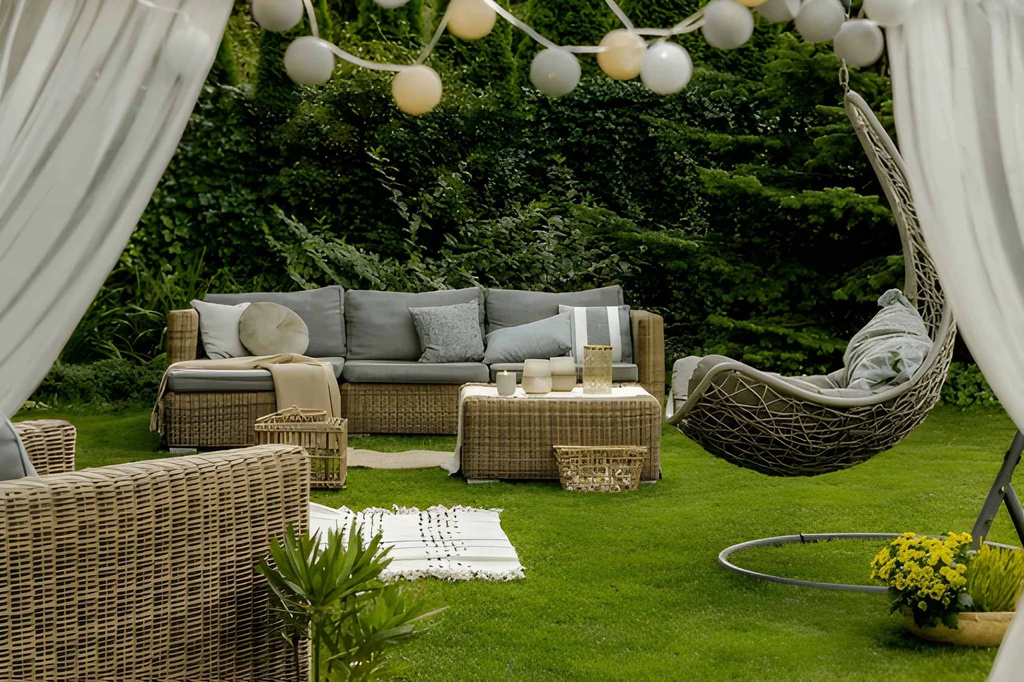
Most US gardens are underused. The space is there, the potential is obvious, but something about the outdoor setup makes it feel like more effort than it’s worth. The chairs are uncomfortable after twenty minutes. The table wobbles. Everything needs to be dragged out of storage every time you want to sit outside. By midsummer, the backyard reverts to something you look at through the window rather than a space you actually inhabit.
The gap between a garden that gets used and one that doesn’t is almost always the outdoor furniture. Not whether you have it — most homeowners have something — but whether what you have is genuinely suited to the space, the climate, and how you actually want to use it.
Outdoor furniture is one of the few home purchases that has to work on every axis simultaneously: it needs to be comfortable enough to sit in for hours, durable enough to handle weather, scaled correctly for the space it occupies, and positioned in a way that makes the garden feel like a room rather than a leftover patch of ground.
This article covers exactly how to get that right — materials, scale, function, positioning, and the specific choices that make a garden worth spending time in.
Why Most Outdoor Furniture Fails Within Two Years
Before getting into what works, it’s worth understanding why so much outdoor furniture disappoints. The failure pattern is consistent across US homeowners: purchase driven primarily by price or appearance, without enough consideration of material performance in the actual climate, functional requirements for how the space will be used, or scale relative to the garden’s dimensions.
| Common Failure Reason | What It Produces | How to Avoid It |
|---|---|---|
| Material wrong for local climate | Rust, fade, warp, or mold within 2 seasons | Match material to your USDA zone and humidity |
| Scale too large for the space | Garden feels cramped, furniture dominates | Measure first, shop second |
| Comfort not tested before purchase | Chairs that look good but get avoided | Sit in it before buying whenever possible |
| No weather protection plan | Cushions degrade, frames corrode | Buy with storage or covers in the budget |
| Function doesn’t match use | Dining set for a garden used for lounging | Decide primary use before choosing category |
Choosing Outdoor Furniture by Material: What Actually Lasts
Material selection is the most consequential decision in outdoor furniture — more than style, more than price. The wrong material in the wrong climate produces furniture that looks good for one season and deteriorates from there.
| Material | Best Climate | Lifespan | Maintenance Level | Price Range |
|---|---|---|---|---|
| Teak | All climates, especially humid | 20–50 years | Low (oils annually) | High |
| Powder-coated aluminum | All climates, especially coastal | 15–25 years | Very Low | Medium |
| Wrought iron | Dry climates, low humidity | 20+ years with care | Medium (rust prevention) | Medium-High |
| All-weather wicker (resin) | All climates | 10–15 years | Low | Medium |
| Recycled plastic (HDPE) | All climates, especially wet | 20+ years | Very Low | Medium |
| Cedar or redwood | Dry to moderate humidity | 10–15 years | Medium (seal regularly) | Low-Medium |
| Steel (non-powder-coated) | Dry climates only | 5–10 years | High | Low |
For most US homeowners dealing with variable weather across four seasons, powder-coated aluminum and all-weather resin wicker offer the best combination of durability, low maintenance, and reasonable cost. Teak is the premium choice that genuinely justifies its price over a decade of ownership.
Outdoor Furniture Categories and Which Garden Needs Which
Not every garden needs the same category of outdoor furniture. The most common mismatch is buying a full dining set for a garden primarily used for relaxed lounging — or buying a single lounge chair for a family that eats outside regularly.
Define primary use before category:
| Primary Garden Use | Best Furniture Category | What to Add |
|---|---|---|
| Daily casual relaxation | Deep-seat lounge chairs or sectional | Side tables, ottomans |
| Regular outdoor dining | Dining table with chairs | Umbrella or shade structure |
| Entertaining groups | Modular seating plus dining area | Bar cart, extra seating |
| Reading and solitary retreat | Single armchair with footrest | Side table, floor lantern |
| Morning coffee routine | Bistro table and two chairs | Nothing else needed |
| Mixed use (dining + lounging) | Convertible or two distinct zones | Defined zones with rug or planters |
The bistro setup deserves more credit than it gets. For smaller US gardens and urban outdoor spaces, a well-chosen bistro table and two chairs deliver more daily use than a full dining set that only comes out for entertaining.
Scale and Placement: Where Outdoor Furniture Actually Gets It Wrong
Outdoor furniture scale mistakes mirror indoor ones — oversized pieces in small spaces, undersized pieces in large ones — but the consequences feel more pronounced outside because natural light makes proportion errors harder to hide.
A general sizing framework for outdoor spaces:
| Outdoor Space Size | Appropriate Furniture Scale | What to Avoid |
|---|---|---|
| Small patio (under 100 sq ft) | Bistro set or loveseat with side tables | Full dining set, large sectional |
| Medium garden (100–250 sq ft) | 4-seat dining set or 3-piece lounge | Oversized modular sectional |
| Large garden (250–500 sq ft) | 6-seat dining plus separate lounge zone | Single small seating group |
| Very large garden (500+ sq ft) | Multiple defined zones | All furniture in one area |
Placement is where outdoor spaces most often fail. Pushing all outdoor furniture against the house wall — the outdoor equivalent of the indoor wall-hugging mistake — makes a garden feel like a loading dock rather than a living space. Float furniture into the garden, create a zone away from the structure, and the space immediately reads as a destination rather than an afterthought.
What Most Homeowners Forget to Budget For
The sticker price of outdoor furniture is rarely the full cost. Several additional items consistently get forgotten until after purchase:
| Additional Cost | Why It Matters | Approximate US Cost |
|---|---|---|
| Seat cushions (if not included) | Comfort over extended use | $30–$150 per chair |
| Furniture covers | Extends lifespan significantly | $40–$120 per piece |
| Umbrella or shade structure | Essential for midday summer use | $80–$400 |
| Outdoor rug | Defines the zone, adds comfort underfoot | $50–$200 |
| Side or accent tables | Functional surface at every seat | $30–$120 each |
| Outdoor lighting | Extends usability beyond daylight | $20–$150 |
Budget for the full setup, not just the anchor pieces. Outdoor furniture without shade in a sunny US climate is furniture that gets avoided between 10am and 4pm for half the year.
Frequently Asked Questions
What outdoor furniture material lasts the longest in the US?
Teak and high-density polyethylene (HDPE) recycled plastic consistently top longevity rankings for US climates. Teak’s natural oils make it weather-resistant without treatment. HDPE is impervious to moisture, UV, and temperature swings and carries no meaningful maintenance requirement. Both routinely outlast other materials by decades when properly chosen for the application.
How do I choose outdoor furniture for a small garden?
Scale down before you style up. A bistro table and two chairs in a small garden is a complete, functional outdoor setup. A four-seat dining set in the same space is a storage problem. Measure the usable area, subtract 18 to 24 inches on each side for circulation, and only consider furniture that fits within the remaining footprint.
Is it worth spending more on quality outdoor furniture?
For primary outdoor spaces that get regular use — yes, consistently. The cost-per-use calculation over ten to fifteen years for quality outdoor furniture almost always beats replacing budget pieces every two to three seasons. The exception is transitional spaces or rentals where long-term investment doesn’t make sense.
How should I protect outdoor furniture during winter in colder US climates?
Store cushions indoors whenever temperatures drop consistently below 40°F — foam degrades faster when repeatedly frozen and thawed. Use fitted covers for frames left outside. Teak and powder-coated aluminum can overwinter uncovered in most US climates without damage. Wrought iron should be covered or stored to prevent rust acceleration in wet winters.
What’s the most versatile piece of outdoor furniture for a US garden?
A well-constructed, weather-resistant armchair with a removable cushion. It works solo for a reading spot, pairs for conversation, groups for entertaining, and scales to almost any garden size. One quality armchair in the right material is more useful than a matched set of pieces that serve only one specific function.
The Bottom Line
A garden that gets genuinely used — not just glanced at — almost always has outdoor furniture that was chosen deliberately rather than defaulted to. The right material for the climate, the right scale for the space, the right category for how the garden is actually used, and the right placement that treats the outdoor area as a room rather than leftover ground.
Get those four decisions right and the garden stops being something you mean to use and becomes somewhere you actually want to be.
Must visit https://designmode24.co/ for outdoor furniture.