 Jessica
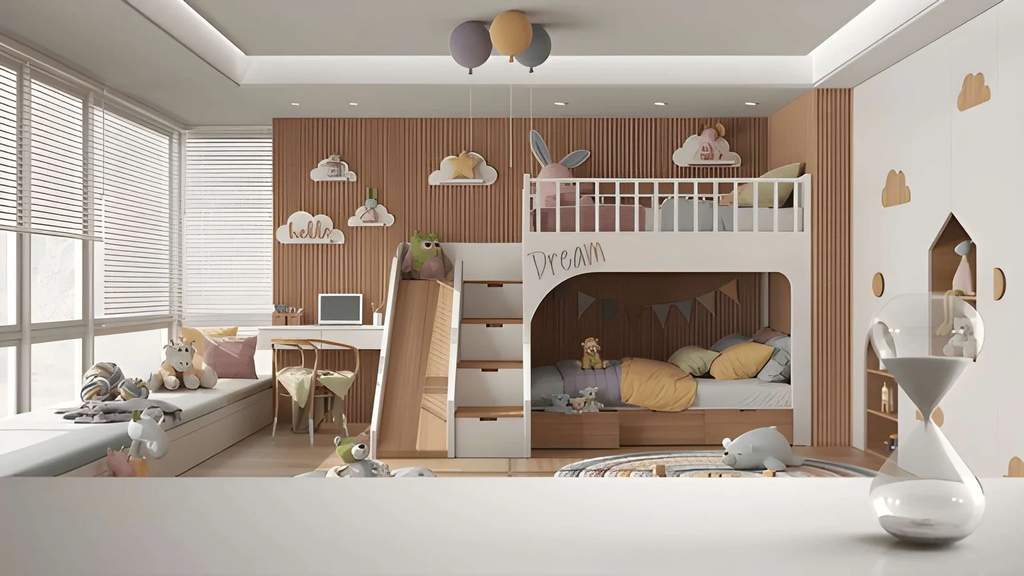
Children’s furniture is one of the most consistently disappointing purchases in the US home market. You spend real money on a themed bed or a character-branded dresser, the child loves it for eighteen months, and then they’re seven years old telling you it looks babyish and they want something different. The furniture is structurally fine. It’s just been outgrown — not in size but in relevance — and now you’re back at the starting point with a smaller budget and a slightly more opinionated child.
The solution isn’t spending less. It’s spending differently — specifically on kids room furniture designed from the ground up to adapt rather than to age out. This category exists and is larger than most parents realize, but it requires knowing what to look for rather than defaulting to what’s marketed most aggressively at the toddler stage.
This article covers exactly which pieces of kids room furniture genuinely grow with children from early childhood through adolescence, what design and construction features make that growth possible, which pieces are worth investing in versus buying cheap and replacing, and how US parents can make furniture decisions at year one that they won’t regret at year ten.
Why Most Kids Room Furniture Fails to Last
The furniture industry benefits from the replacement cycle children create. Themed collections, age-specific sizing, and trend-driven aesthetics all accelerate obsolescence — which is good for sales and bad for parents’ budgets and landfills.
| Why Kids Furniture Gets Replaced | How Often It Happens | What Prevents It |
|---|---|---|
| Theme or character becomes “babyish” | 2–4 years | Theme-neutral design from the start |
| Toddler bed too small by school age | 3–5 years | Start with twin size minimum |
| Dresser too short as child grows | 5–8 years | Adult-height dresser from the beginning |
| Desk too small for school workload | 4–6 years | Adjustable or adult-sized desk |
| Bookshelf outgrown in capacity | 3–5 years | Full-height shelving with adjustable shelves |
| Chair wrong height for desk | Continuous | Adjustable chair that grows with child |
The pattern is consistent: furniture that was designed specifically for a developmental stage gets replaced when that stage ends. Furniture designed without developmental specificity — no themes, adult proportions, neutral aesthetics — stays relevant indefinitely.
The Kids Room Furniture Pieces That Genuinely Grow With Children
The Bed: Start With Twin, Skip Toddler Entirely
The toddler bed is the single biggest money waste in kids room furniture for most US families. A child uses a toddler bed for roughly two to three years before needing a twin or full — and a twin bed with a low-profile frame or a floor-level platform serves a toddler equally well while eliminating the replacement purchase entirely.
The convertible crib-to-bed category extends the crib’s life by converting to a toddler bed, but still requires replacement at school age. Starting with a twin from the beginning — with a firm mattress and a simple, unthemed frame — is the furniture decision most likely to last from ages two through eighteen.
| Bed Type | Usable Age Range | Replacement Risk | Longevity Value |
|---|---|---|---|
| Toddler bed | 18 months–4 years | High — outgrown quickly | Low |
| Convertible crib | Birth–4 years | Medium — still replaced at school age | Medium |
| Twin, simple frame | 2 years–adulthood | Very Low | Very High |
| Full/double, neutral frame | 4 years–adulthood | Very Low | Very High |
| Loft bed (adjustable) | 5 years–teen years | Low if quality | High |
The Dresser: Buy Adult Height and Proportions
Most kids dressers top out at around 36 inches — a height that’s convenient for a four-year-old to reach the top drawer but comically short for a twelve-year-old. A standard adult dresser at 48 to 54 inches functions perfectly for a young child (lower drawers are accessible) and remains appropriate through adolescence and beyond.
The investment in a quality, adult-proportioned dresser at the start of the child’s room setup eliminates the replacement purchase and provides meaningfully better storage capacity through all stages. Solid wood construction is worth the premium — it handles the sustained abuse of childhood better than particleboard and remains structurally sound at resale or hand-me-down stage.
The Desk: Adjustable Height Is the Non-Negotiable Feature
Kids room furniture fails at the desk category more consistently than almost anywhere else. A fixed-height desk that’s right for a six-year-old is wrong for a ten-year-old and unusable for a fourteen-year-old. An adjustable-height desk eliminates this problem entirely.
Adjustable desks for children range from $80 to $300 and cover height ranges that span from early school age through adolescence. The mechanism varies — manual crank, pin adjustment, or modular legs — but the function is the same: the desk surface moves to the correct ergonomic height for the child’s current size.
| Desk Type | Adjustable Range | Suitable Age Span | Price Range |
|---|---|---|---|
| Fixed kids desk | None — one height | 5–8 years typically | $60–$150 |
| Manual crank adjustable | 24–48″ typical | 5 years–adulthood | $150–$400 |
| Pin-adjust height desk | 22–36″ typical | 4–14 years | $80–$250 |
| Standing desk (adjustable) | Full adult range | 8 years–adulthood | $200–$500 |
| Adult desk (fixed, appropriate height) | None needed | 10 years–adulthood | $100–$400 |
Shelving: Full-Height With Adjustable Shelves
A bookshelf that reaches from floor to near-ceiling with adjustable shelf heights serves a child from picture books through textbook collections and beyond — adjusting the shelf spacing as book and storage needs change rather than becoming obsolete.
The IKEA Billy bookcase has become a default for this reason: its 79-inch height and adjustable shelves work for a toddler’s toy storage, a school-age child’s book collection, a teenager’s combination of books and displayed objects, and eventually a young adult’s apartment. The aesthetic is neutral enough that it never becomes specifically childish.
Full-height shelving also serves double duty as a visual element that makes a child’s room feel more designed — it gives the room vertical scale and a sense of permanence that low-profile kids furniture doesn’t.
What to Buy Cheap and Replace vs. What to Invest In
Not everything in a child’s room warrants a longevity investment. Some categories genuinely benefit from low-cost purchases that get replaced as preferences change.
| Furniture Category | Strategy | Reasoning |
|---|---|---|
| Bed frame | Invest — neutral, quality, adult-sized | Used daily for 15+ years |
| Dresser | Invest — adult proportions, solid construction | 15+ year lifespan if quality |
| Desk | Invest — adjustable height | Ergonomic need changes constantly |
| Full-height shelving | Invest — neutral, adjustable shelves | Capacity and use changes, not the shelf |
| Desk chair | Mid-range adjustable — replace every 5–7 years | Ergonomic needs change significantly |
| Bedside table | Budget — preferences change | Low daily functional importance |
| Decorative items | Budget — change frequently | Personalization that evolves with child |
| Rug | Mid-range — expect one replacement | Wear and style preferences change |
Frequently Asked Questions
What kids room furniture is worth spending money on for longevity?
The bed, dresser, and desk — in that order. These are the pieces used most intensively and most likely to need replacement if bought to a child-specific standard. A twin bed in a neutral frame, an adult-height dresser in solid wood, and an adjustable-height desk are the three investments that consistently last from early childhood through the teenage years without requiring replacement.
Should I skip the toddler bed entirely?
For most US families, yes. A twin bed with a simple low frame or a floor-level platform serves a two-year-old safely — particularly with a bed rail if needed — and eliminates the replacement purchase at age four or five. The toddler bed serves a maximum of two to three years and then gets replaced anyway.
What makes kids room furniture actually grow with a child?
Three features: adjustability (desk height, shelf spacing), neutral aesthetics (no themes, no character branding, no age-specific design), and adult proportions (full-height shelving, standard dresser heights, twin or full beds). Furniture with all three characteristics has no developmental expiry date.
How do I make a child’s room feel personal without buying themed furniture?
Through textiles, artwork, and accessories rather than furniture. A neutral bed frame with character-themed bedding delivers personalization that’s replaced in twenty minutes when interests change. Wall decals, removable artwork, themed cushions, and colored storage boxes all deliver personality without committing the structural furniture to a theme that will feel babyish in three years.
At what age should I buy a full-sized bed instead of twin?
If space allows, starting with a full or double bed at school age rather than twin removes one more replacement purchase from the trajectory. A full bed serves a child from age five through adulthood and costs only marginally more than a twin. For rooms where space is the constraint, a twin is the right choice — but a queen or full is never wrong if the room can accommodate it.
The Bottom Line
The most expensive kids room furniture decision most US parents make isn’t buying something high-end — it’s buying something age-specific and replacing it three times over twelve years. The cumulative cost of that replacement cycle consistently exceeds the cost of buying adult-proportioned, adjustable, neutral furniture once.
Buy the twin bed with the simple frame. Buy the adult-height dresser in solid wood. Buy the adjustable desk. Use textiles and accessories for personalization that can change without a furniture purchase. That combination serves a child from toddlerhood through leaving for college — and holds its value well enough to pass on or resell when the time comes.
Must visit https://designmode24.co/ for more kids room furniture ideas.