 Jessica
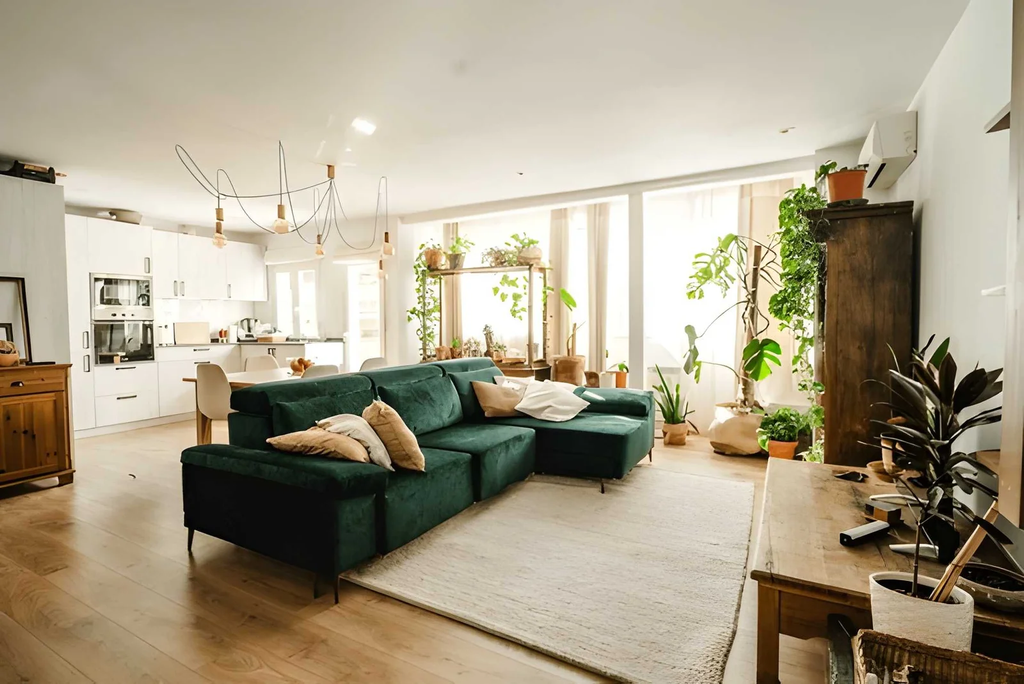
There’s a reason professional photographers never use the lights that are already in a room. Existing residential lighting — the builder-grade fixtures, the single overhead source, the cool-white bulbs that came with whatever was installed at construction — consistently fails to show a space at anything close to its best. It flattens depth, misrepresents color, and eliminates the shadow and variation that make rooms look three-dimensional and designed rather than institutional and flat.
Most US homeowners live with this problem indefinitely — not because they don’t notice that something is off, but because they don’t identify lighting as the source. The sofa gets blamed, then the paint color, then the rug. New purchases arrive and the room still doesn’t feel right. The lighting was the issue the whole time, and it’s still the issue after everything else has been changed.
Poor lighting undermines good furniture, careful color selection, and genuine design investment every single day. Good lighting makes modest furniture look intentional, makes paint colors read as intended, and makes people feel more comfortable in a space than they can usually explain. This article covers how to diagnose your current lighting situation, what’s most likely wrong with it, and the specific changes that produce the most immediate and significant improvement.
Why Most Residential Lighting Fails
Understanding the specific failure modes of typical US home lighting is the starting point for fixing it.
| Lighting Failure Mode | What It Produces | How Common |
|---|---|---|
| Single overhead fixture per room | Flat, even illumination with no depth or shadow | Extremely common — builder standard |
| Cool-white bulbs (4000K+) | Makes warm colors read cold, creates clinical atmosphere | Very common — energy-efficient bulbs default to cool |
| No dimming capability | Fixed mood regardless of time of day or use | Common — dimmer switches rarely installed by default |
| Fixtures undersized for the space | No visual presence, contributes nothing to design | Common — builders minimize fixture costs |
| No layered sources | Everything at same height and intensity | Nearly universal in builder-grade homes |
| Recessed lighting only | Functional but characterless — produces no warmth | Very common in post-2000 US construction |
| Vanity light above mirror | Creates unflattering downward shadows | Extremely common in US bathrooms |
The single overhead fixture problem is the most fundamental and most widespread. A single source at ceiling height casts uniform light downward, eliminating the shadows that create visual depth and the variation that makes rooms feel interesting. The result is accurate but unflattering — the photographic equivalent of shooting with a flash directly on the camera.
What Good Lighting Actually Does
Before diagnosing what’s wrong with your current setup, it helps to understand what good lighting is doing in the rooms that work — the spaces that feel comfortable and designed rather than functional and flat.
Good lighting operates at multiple heights simultaneously, creating a layered effect that mimics the complexity of natural light. It’s warmer in tone than most builder installations, because warm light makes surfaces look richer and makes people look healthier. It varies in intensity — brighter where tasks happen, dimmer where rest is the goal — and it changes throughout the day rather than maintaining a fixed setting from morning to night.
The spaces that feel most inviting are almost always spaces where the lighting is doing more than illuminating. It’s establishing atmosphere, creating destinations within the room, and making the materials and colors of the space look like the versions of themselves they were meant to be.
| Lighting Quality | What It Creates | How to Achieve It |
|---|---|---|
| Multiple source heights | Visual depth and dimension | Floor lamps + table lamps + overhead |
| Warm color temperature | Psychological warmth, accurate color rendering | 2700K–3000K bulbs throughout living spaces |
| Dimmability | Mood flexibility across uses and times of day | Dimmer switches on all primary circuits |
| Varied intensity zones | Destinations within the room | Task light at work areas, ambient elsewhere |
| Accent elements | Highlights objects and creates visual interest | Picture lights, shelf strips, directional spots |
| Scaled fixtures | Visual presence and design contribution | Fixtures proportional to room dimensions |
Diagnosing Your Current Lighting by Room
Living Room
The living room is where lighting failure is most impactful and most common. Walk in at 8pm with only your standard overhead lighting active and assess honestly: does the room feel warm and inviting or flat and functional? If the answer is flat and functional, the diagnosis is almost certainly insufficient layering — no floor lamps, no table lamps, no accent sources to create depth and warmth.
The fix sequence: first, add one floor lamp to the room’s darkest corner. The shift this produces is immediately significant — a single lamp at eye level creates more atmosphere than any overhead fixture change. Second, replace cool bulbs with 2700K warm white throughout. Third, install a dimmer on the overhead circuit. These three changes, in order, transform most US living rooms for under $150.
Bedroom
Bedroom lighting failures tend toward two specific problems: overhead lighting that’s too bright for evening wind-down, and an absence of bedside task lighting at the right height for reading.
Circadian research from Harvard Medical School and other institutions has documented that bright, cool-white light in the hours before sleep suppresses melatonin production and delays sleep onset. A bedroom with only overhead lighting that runs at full brightness until the moment of sleep is creating a physiological mismatch between the environment and what the body needs to prepare for rest.
The fix: dimmers on all bedroom circuits, 2700K maximum for all bedroom bulbs, and bedside lamps at mattress height that can be the sole light source for reading and wind-down routines.
Kitchen
Kitchen lighting needs to serve two very different purposes — task lighting for safe food preparation and ambient lighting for a space that often functions as a social gathering area. Most US kitchens have neither done well.
Under-cabinet LED lighting is the single most impactful kitchen lighting addition available. It costs $40 to $150 in materials, provides task illumination directly at the counter surface where it’s needed, and can be installed in an afternoon without electrical experience.
Bathroom
The ubiquitous single fixture above the bathroom mirror is one of the most unflattering lighting configurations in residential design. Light from directly above creates downward shadows under eyes, nose, and chin — the opposite of flattering — and makes the mirror less useful for the grooming tasks it’s supposed to support.
Side-mounted vanity lighting at face height eliminates directional shadow entirely. Two sconces flanking the mirror at approximately 60 to 65 inches from the floor provide the most accurate and flattering bathroom illumination available at any price point.
| Room | Primary Lighting Problem | Highest-Impact Fix | Approximate Cost |
|---|---|---|---|
| Living room | Single overhead, no layering | Add floor lamp + warm bulbs | $60–$150 |
| Bedroom | Bright overhead, no bedside lamps | Dimmers + bedside lamps + 2700K bulbs | $80–$200 |
| Kitchen | Poor task lighting, no counter illumination | Under-cabinet LED strips | $40–$150 |
| Bathroom | Overhead vanity light, unflattering shadows | Side-mounted vanity sconces | $80–$300 |
| Dining room | Wrong fixture scale, no dimmer | Scale-appropriate fixture + dimmer | $100–$400 |
| Home office | Insufficient task light, eye strain | Desk lamp + reduced overhead brightness | $40–$120 |
| Hallway | No variation, purely functional | Wall sconce or pendant at intervals | $60–$200 |
The Bulb Temperature Problem Most Homeowners Don’t Know They Have
The single most widespread and most fixable lighting problem in US homes is bulb color temperature. Most energy-efficient LED bulbs sold in hardware stores default to cool-white (4000K to 5000K) temperatures — partly because manufacturers associate brightness with cool light, and partly because cool light performs better in certain commercial and task environments.
In residential spaces — particularly living rooms, bedrooms, and dining areas — cool-white lighting consistently underperforms warm-white in terms of how it makes the space feel, how it renders paint colors and textiles, and how it affects occupant mood and comfort.
| Bulb Temperature | Kelvin Range | Appropriate Room | Effect on Space |
|---|---|---|---|
| Warm white | 2700K | Bedroom, living room, dining room | Warm, relaxing, residential |
| Soft white | 3000K | Kitchen (evening), bathrooms | Balanced — functional but not harsh |
| Neutral white | 3500K–4000K | Kitchen (task), home office | Functional, clear — not warm |
| Cool daylight | 5000K–6500K | Garage, workshop, utility | Alert, clinical — not residential |
The fix costs $15 to $40 for most rooms: replace existing bulbs with 2700K warm white alternatives. The difference in how the room reads — particularly in the evening under artificial light — is significant enough to feel like a different room without any other change.
Frequently Asked Questions
What is the most common lighting mistake US homeowners make?
Relying on a single overhead fixture as the sole light source in living spaces. This produces flat, even illumination that eliminates visual depth, warmth, and the variation that makes rooms feel designed rather than functional. Adding at least one additional light source at a lower height — a floor lamp or table lamp — produces more immediate improvement than replacing the overhead fixture itself.
How do I know if my lighting is wrong for a room?
Walk into the room at 8pm with only your standard lighting active and observe honestly how the space feels. If it reads as clinical, flat, or institutional rather than warm and inviting, the lighting is wrong for the room’s evening function. If paint colors look different in the room than they did on the chip, the bulb temperature is likely too cool.
Is expensive lighting necessary for good results?
No. The changes with the highest impact — bulb temperature, adding a floor lamp, installing dimmer switches — are among the lowest-cost changes available. A $45 floor lamp with a warm-white bulb and a $15 dimmer switch on the overhead circuit produce more livable lighting than an expensive new overhead fixture installed with the same bulbs in the same configuration.
Do dimmer switches make a significant difference?
More than most homeowners expect. The ability to reduce overhead lighting in the evening — from 100% to 40% or 20% — changes the mood of a room more significantly than most furniture or decoration changes. Dimmer switches cost $15 to $40 each and install in approximately thirty minutes with basic electrical knowledge. They’re consistently the highest-ROI lighting upgrade available per dollar spent.
How many light sources should a living room have?
At minimum: one overhead source with dimmer, one floor lamp, and one table lamp. That’s three sources at three different heights, which is the minimum for a layered lighting effect. Larger living rooms benefit from four to six sources, including accent lighting on artwork or shelving. The goal is variation in height and intensity — no single source should be doing all the work.
The Bottom Line
Your lighting is either doing your home justice or working against it — and in most US homes, it’s working against it in ways that undermine furniture quality, paint color accuracy, and the overall atmosphere of spaces you’ve invested real money in improving.
The fixes are neither expensive nor complicated. Warm the bulbs. Add a lamp to the darkest corner. Install a dimmer. Fix the bathroom vanity light. Layer rather than single-source. These five changes, applied systematically across a home, produce a transformation that no furniture purchase or paint color change can replicate — because they change the conditions under which everything else is experienced.
Start with the bulbs tonight. Everything else follows from there.
For more lighting ideas must visit https://designmode24.co/