 Jessica
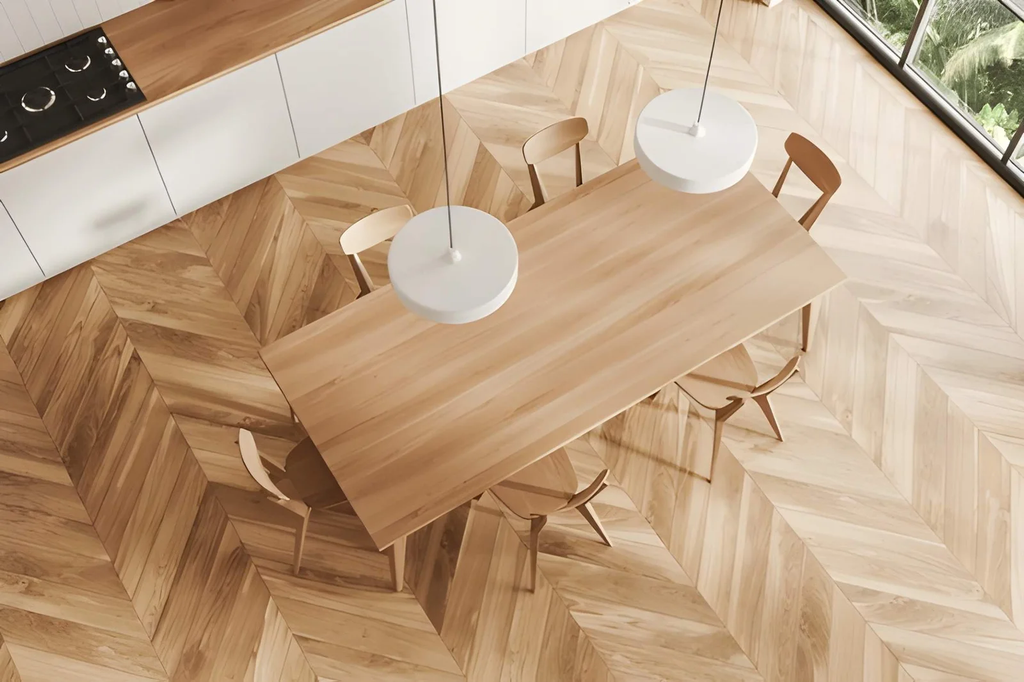
Walk through the most admired residential interiors in US design history — from colonial craftsman homes to mid-century modern interpretations to contemporary Scandinavian-influenced spaces — and oak wood shows up in almost all of them. Not as a trend that was adopted and eventually replaced. As a constant. A baseline material that different design periods reach for independently, each finding it suited to their aesthetic intentions despite those intentions having almost nothing else in common.
That consistency is unusual enough to warrant a genuine explanation. Most materials cycle — stone had its period, concrete had its period, steel had its period. Oak wood never really left. It’s been cut into floors, shaped into furniture, used in cabinetry and structural elements, and adopted by virtually every design tradition that has used residential interiors as a vehicle for aesthetic expression.
Why? The answer involves a combination of physical properties, visual characteristics, working qualities, aging behavior, and a biological human response to the material that turns out to be more consistent than most people realize. This article examines all of it — not to celebrate oak uncritically but to understand specifically what makes it perform as well as it does, and what US homeowners should know before making significant oak investments in their own homes.
The Physical Properties That Make Oak Wood Perform
Oak’s reputation isn’t primarily aesthetic — it’s earned through physical performance that’s been tested across centuries of residential use. Understanding why it performs helps explain why it keeps being chosen.
| Physical Property | Oak Wood Specification | Practical Implication |
|---|---|---|
| Janka hardness (white oak) | 1,360 lbf | Resists denting from furniture and daily foot traffic |
| Janka hardness (red oak) | 1,290 lbf | Still among the hardest domestic US hardwoods |
| Dimensional stability | High in white oak, moderate in red | Handles humidity changes better than many alternatives |
| Density | 45 lbs per cubic foot (white oak) | Substantial feel underfoot and in furniture |
| Workability | High — cuts, joins, and finishes well | Allows precision in furniture and cabinetry making |
| Bendability | Exceptional when steam treated | Enables curved forms that other hardwoods resist |
| Durability | 100+ years in quality flooring applications | Outlasts virtually every alternative at comparable price |
The hardness figure is worth dwelling on. At 1,360 on the Janka scale, white oak is significantly harder than pine (870), cherry (950), and walnut (1,010) — the most common alternatives in residential applications. It’s softer than hickory (1,820) and some exotics, but those species lack oak’s workability and design versatility.
The dimensional stability of white oak — its relative resistance to expansion and contraction with humidity changes — makes it particularly appropriate for the US residential environment, where HVAC systems create seasonal humidity swings that can cause movement problems in less stable species.
The Visual Qualities That Explain Oak Wood’s Universal Appeal
Physical performance explains why oak wood lasts. It doesn’t fully explain why it’s loved. The visual qualities do that.
The Grain Pattern
Oak has a medullary ray grain pattern — the characteristic flecks and ribbons visible in quarter-sawn oak, the open grain texture visible in flat-sawn oak — that’s visually complex without being busy. The eye reads it as interesting without being demanded by it. This is the quality that makes oak wood appropriate in both spare, minimal interiors and richly layered ones: it adds visual texture at whatever intensity the specification calls for.
Quarter-sawn oak, where the log is cut perpendicular to the growth rings, reveals the medullary ray pattern most dramatically — a characteristic that Arts and Crafts designers like Gustav Stickley elevated deliberately as an aesthetic statement. Flat-sawn oak shows a more varied, less linear grain that reads as warmer and more informal.
The Color Range and Aging Behavior
Oak wood’s natural color range — from pale golden tones in newly cut white oak to the warm honey that develops with UV exposure — is warm without being orange, neutral without being cold. It occupies a tonal territory that works alongside a wider range of other materials and palette choices than most woods manage.
More importantly, oak’s aging behavior is one of its most distinctive qualities. Properly finished, oak deepens and enriches over time rather than degrading. A well-maintained oak floor that’s sixty years old has a patina that newly manufactured products spend considerable effort trying to replicate — the depth, variation, and warmth that accumulates through decades of use and light exposure.
| Oak Wood Finish Type | Color Character | Aging Behavior | Longevity Risk |
|---|---|---|---|
| Natural / hardwax oil | Pale golden, shows true wood color | Deepens beautifully over decades | Very Low |
| Lightly whitened | Cool grey-beige | Maintains tone with light maintenance | Low |
| Warm teak oil finish | Enhanced golden tone | Continues to warm over time | Very Low |
| Dark stain (espresso) | Brown-black, grain obscured | Fades unevenly, trend-specific | High |
| Grey wash stain | Cool grey, grain visible | Fades over time, trend-specific | High — peaked 2015–2022 |
| White pigment oil | Pale, Scandinavian | Requires maintenance, trend-adjacent | Medium |
White Oak vs. Red Oak: The Distinction That Matters
Oak wood comes in two primary species for US residential use, and the distinction is more significant than most homeowners realize.
| Characteristic | White Oak | Red Oak |
|---|---|---|
| Color | Warm beige to light brown | Pink to reddish-brown undertone |
| Grain pattern | More closed grain, medullary rays prominent | More open grain, less pronounced rays |
| Hardness | 1,360 lbf | 1,290 lbf |
| Water resistance | High — tyloses block pores | Lower — open pores less water-resistant |
| Design versatility | Very High — suits more palettes | High — warm/rustic palettes specifically |
| Current preference | Strongly preferred in contemporary design | Classic but less contemporary |
| Price | Slightly higher | Slightly lower |
| Best applications | Floors, cabinetry, outdoor furniture | Interior furniture, traditional applications |
White oak’s design dominance in current US residential interiors comes primarily from its cooler, more neutral undertone — it works alongside the cool greys, warm whites, and muted palettes that have defined US residential interiors since roughly 2015 — and its closed pore structure that makes it more resistant to moisture and easier to finish cleanly.
Red oak’s pinkish undertone made it the dominant residential choice through the 1980s and 1990s and is now so strongly associated with that era that new installations read as dated in contemporary contexts regardless of how well they’re executed.
Why Oak Wood Works Across So Many Design Styles
The most remarkable quality of oak wood in residential design is its stylistic flexibility — its ability to work appropriately in design contexts that share almost nothing else.
| Design Style | How Oak Wood Is Used | Why It Works |
|---|---|---|
| Arts and Crafts | Quarter-sawn, visible grain, dark mortise-and-tenon joints | Grain pattern celebrated as design element |
| Mid-century modern | Tapered legs, thin profiles, pale finish | Workability enables precise contemporary forms |
| Scandinavian minimal | Light natural finish, simple forms | Pale tone works with white and grey palettes |
| Traditional American | Panel doors, turned legs, darker finishes | Durability and workability suit complex joinery |
| Contemporary farmhouse | Wide plank floors, reclaimed beams | Texture and warmth balance industrial elements |
| Japanese influenced | Natural finish, simple forms | Grain quality suits wabi-sabi aesthetic |
| Industrial | Reclaimed, raw edge, contrasted with metal | Warmth balances hard industrial materials |
This range is what no synthetic material replicates and no other wood species matches in breadth. Oak wood’s visual neutrality — warm but not aggressively so, complex but not demanding — allows it to be shaped into the forms and finished in the tones that each style requires without fighting the material.
Frequently Asked Questions
Why is oak wood used so commonly in US residential construction and design?
Because its physical performance and visual qualities align with residential requirements more completely than any comparable alternative. It’s hard enough to resist daily use, stable enough to handle humidity changes, workable enough to be shaped into precision forms, visually complex enough to be interesting, and warm-toned enough to feel residential rather than commercial. No single alternative matches all of these simultaneously at oak’s price point.
What is the difference between white oak and red oak for home use?
White oak has a cooler, more neutral undertone, a more closed grain structure, and better moisture resistance — making it preferable for floors, outdoor applications, and contemporary interiors. Red oak has a warmer, pinker undertone and is associated with traditional and rustic applications. In current US residential design, white oak is strongly preferred in contemporary applications; red oak is less commonly specified in new installations.
Does oak wood furniture last longer than alternatives?
Significantly, when comparing to manufactured wood alternatives. Solid oak furniture has a realistic generational lifespan — fifty to one hundred years in quality construction — that particleboard, MDF, and engineered alternatives don’t approach. The investment is higher upfront; the cost per decade of use is lower than repeatedly replacing inferior alternatives.
Is oak wood worth the premium over less expensive alternatives?
For high-use, high-visibility applications — floors, dining tables, kitchen cabinetry — yes, consistently. Oak’s combination of durability, refinishability, and aging behavior produces a long-term cost advantage over alternatives that appear less expensive at purchase but require replacement within a decade. For low-use, low-visibility applications, the premium is less justified.
What finish preserves oak wood best for the longest life?
Hardwax oil finishes — penetrating oil treatments that soak into the wood rather than sitting on the surface — consistently outperform polyurethane for long-term oak floor maintenance. They’re easier to spot-repair, allow the wood to breathe naturally, and age more gracefully than surface coatings that eventually chip and scratch. For furniture, a similar penetrating oil finish or a quality water-based polyurethane in a matte sheen provides protection without the plastic surface quality that high-gloss coatings produce.
The Bottom Line
Oak wood’s universal and timeless appeal isn’t sentiment or habit. It’s earned through a combination of physical performance that outlasts virtually every alternative, visual characteristics that work across design styles because they’re complex without being demanding, and aging behavior that makes oak more valuable and more beautiful over time rather than less.
White oak is the species to choose for contemporary US residential applications. Natural or lightly enhanced finishes are the investment with the longest aesthetic longevity. Solid construction over manufactured alternatives is worth the premium for any application where the piece will be used daily for decades.
The design traditions that keep returning to oak wood — from Arts and Crafts to Scandinavian modern to contemporary American — do so because the material keeps performing at the level they need it to. That consistency, across periods that share nothing else aesthetically, is the clearest possible evidence that the appeal is real.
Must visit https://designmode24.co/ for oak wood interior design.