 Admin
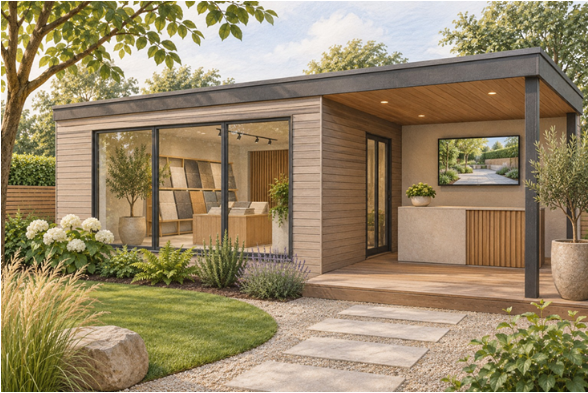
When clients visit a home business, the appointment begins before they sit down. It begins while they check the address, decide which gate to use and wonder whether the door at the end of the garden is the right one. A confusing arrival can make both parties feel awkward, even when the service itself is excellent.
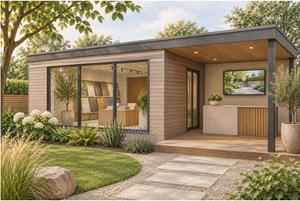
Outdoor entrance design gives those first few minutes some attention. You need a route that visitors can follow comfortably and a boundary that allows the household to carry on with its day. Whether you work from a garden office or a room with its own external door, a few practical decisions can make the arrangement feel much more settled.
Work backwards from a normal appointment
Describe the visits your business actually receives. How many people arrive together? Do they bring samples, paperwork or bulky equipment? Are meetings occasional, or is there someone coming and going throughout the day? These details give you a better brief than a general wish for a professional entrance.
The busiest ordinary day is a useful test. Include deliveries and any colleague who also needs access. Check the business use against the relevant permissions, insurance and property restrictions before building permanent features around it. Getting those basics established makes the design decisions more straightforward.
Consider how an appointment finishes as well. People may stop near the door to confirm a detail or arrange another visit. Give them room to do that without blocking an incoming client or stepping into a private part of the garden.
Make the route obvious from the start
Walk from the street to the workroom as though you’ve never visited. Look for the point where you first need a direction. A path that feels obvious to the family may seem uncertain to someone standing outside a closed side gate.
Keep arrival instructions short and accurate. If you mention a gate, make sure it remains accessible at appointment times. If the visitor needs to ring a bell, position it where they can identify it. A clear message and a legible physical route work together; neither should have to compensate for confusion created by the other.
Allow for bags, wet weather and the people who will use the approach. Move bins and stored bicycles away from the principal route. Where access has unavoidable limitations, describe them honestly before the visit so the client can make suitable arrangements.
Give the landing a useful shape
The area outside the door is often asked to do more than its size allows. A visitor stands there, the door opens into it and a planter occupies the corner that looked empty on the drawing. Plan around those movements before buying furniture.
NeoTimber’s decking ranges are worth exploring when a board landing suits the building and site. Look at the complete system, including its supporting structure, rather than deciding from a board sample alone. Thresholds, drainage and levels need to be coordinated with an appropriate installer.
Mark the proposed area and test the door swing. Try arriving while carrying a bag, then have another person stand near the entrance. This will tell you whether the landing needs a different proportion or whether an attractive bench would be better placed further along the route.
Keep family space comfortable
Clients don’t need access to every pleasant part of the garden. A change in surface, a carefully positioned gate or planting can guide them towards the office while preserving a private seating area for the household.
Look at the views through the workroom windows and back towards the house. A waiting client shouldn’t unintentionally have a clear view into a bedroom or private patio. Adjust the waiting point or the route before adding extensive screening. Sometimes moving one chair solves the issue more cleanly than enclosing the entire approach.
If children, pets or other family members use the garden during working hours, build that reality into the routine. The arrangement should be understandable to everyone who lives there, so opening for business doesn’t require a daily negotiation over which part of the property can be used.
Use a sign to answer the right question
A home business usually needs confirmation and direction more than a large advertising display. Decide what a first-time visitor needs to know at the gate. It may be as simple as the business name and an arrow towards the office.
Alpen Signs supplies signage that can be considered for a business entrance. Discuss the wording, viewing position and outdoor exposure before choosing the finish. Check applicable restrictions and keep the design proportionate to the setting. Clear lettering does more for the arrival experience than elaborate branding that is difficult to read.
Test the information from the visitor’s viewpoint. Can it be seen before they reach the wrong door? Does it remain readable when planting grows? Keep appointment messages consistent with the physical arrangement whenever the gate, doorbell or preferred route changes.
Plan for rain and evening visits
The approach should still make sense when it isn’t a pleasant summer afternoon. Notice where water gathers and whether the doorway has somewhere for a visitor to close an umbrella. Provide an appropriate place for wet coats or bags inside, rather than letting them compete with consultation materials.
Lighting needs the same practical approach. Walk the route after dark and look for changes in level, gate latches and the entrance handle. Use outdoor fittings suited to the location and arrange qualified electrical installation. Consider neighbouring windows when deciding where the light falls.
Any waiting arrangement also needs to be realistic in poor weather. If the property cannot offer a comfortable place for early arrivals, explain the preferred arrival time clearly. Don’t add an outdoor chair and assume that every client will find it a suitable waiting area throughout the year.
About NeoTimber
NeoTimber offers composite and aluminium decking alongside other outdoor product ranges. Its website brings together product comparisons, sample options, planning calculators and installation resources that can help with the early stages of a project.
For a home business entrance, use those resources to investigate the material before settling the layout with your installer. The landing needs to work with the door and the garden approach, so include supporting and edge details in the specification. A sample helps you judge appearance, while the installation information supports the practical conversation about how the finished area will be built and maintained.
Let the first month reveal the small improvements
Once appointments begin, note the problems that recur. If several clients miss the same gate, the direction needs attention. If bags always end up in the doorway, provide a better place for them. Repeated behaviour is useful feedback about the space.
Start with targeted changes. A moved planter, a clearer message or a better-positioned light may resolve the issue. The entrance is working when people can arrive without uncertainty and the household can continue using its home comfortably. That gives the business a calm, confident welcome without requiring the garden to feel like a commercial reception area.Read more at https://designmode24.co/.