 Jessica
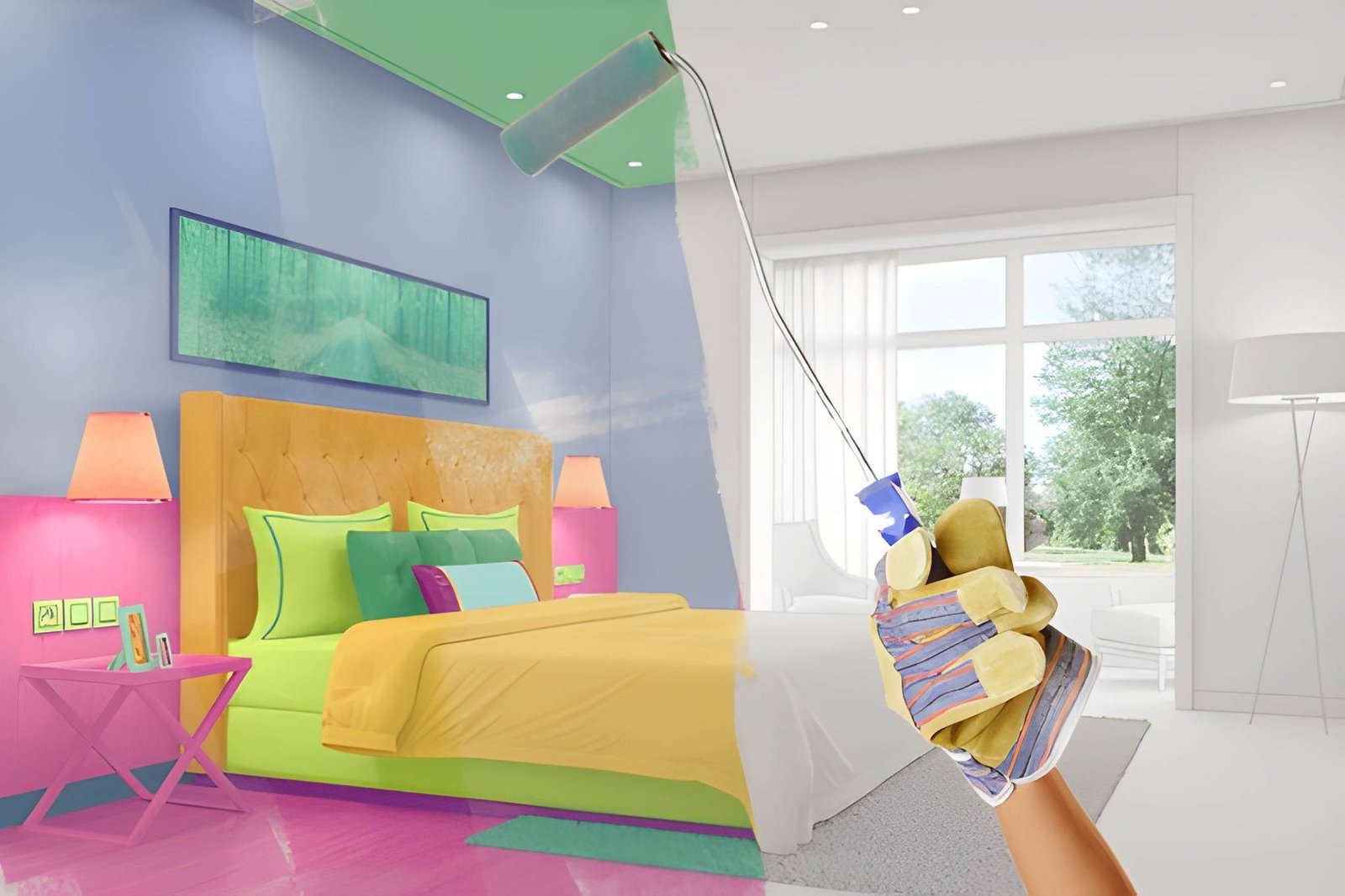
Walk into a small room painted the wrong color and you feel it immediately — the walls close in, the ceiling drops, and the space feels half its actual size. Walk into the same room painted correctly and something shifts. The room breathes.
Most people assume white is the automatic answer when asking what paint color makes a small room look bigger. White helps — but it’s rarely the complete answer, and in some rooms it actively works against you by creating harsh contrast with furniture and trim that makes the space feel starker, not larger.
The paint colors that genuinely expand a small room work through light reflectance, undertone temperature, and the way the human eye reads depth and shadow. Get those three variables right and a 10×10 bedroom stops feeling like a storage closet.
This guide covers the specific paint colors — with real product names available at US retailers — that make small rooms look bigger, why they work, and which rooms each one suits best.
Why Paint Color Affects Perceived Room Size
Paint color changes how a room feels through Light Reflectance Value (LRV) — a measurement of how much light a color reflects back into the space. Colors with a high LRV (above 70) reflect more light, which makes walls recede visually and the room feel more open. Colors with a low LRV absorb light, which pulls walls inward.
But LRV alone doesn’t tell the whole story. Undertone matters equally. A white paint with a blue or grey undertone reads cooler and crisper — which can feel clinical in a north-facing room. A white with a yellow or cream undertone reads warmer and softer — which suits rooms with limited natural light far better.
| LRV Range | Effect on Space | Examples |
|---|---|---|
| 85–100 | Maximum light reflection, most expansive | Bright white, pure white |
| 70–84 | Strong reflection, open and airy | Off-whites, pale neutrals |
| 50–69 | Moderate — works in well-lit rooms | Light greige, soft sage |
| Below 50 | Absorbs light, compresses space | Medium and deep colors |
What Paint Color Makes a Small Room Look Bigger: The Best Options
Soft White With Warm Undertones
This is the most reliable answer for most small rooms in American homes. Not stark bright white — warm white with yellow, peach, or cream undertones that reads as welcoming rather than clinical.
Top US options:
- Benjamin Moore White Dove (OC-17) — LRV 85.08, slightly warm, works in almost any small room
- Sherwin-Williams Alabaster (SW 7008) — LRV 82, creamy undertone, consistently ranked among designers’ top choices
- Behr Ultra Pure White — LRV 93, brighter and crisper, best for rooms with strong natural light
Soft Blue-Grey
Pale blue-grey reads as receding — the eye interprets cooler colors as further away, which pushes walls back visually. In a small room with decent natural light, a soft blue-grey creates depth that warm whites don’t.
Top US options:
- Benjamin Moore Pale Oak (OC-20) — technically a greige but reads blue-grey in cool light, LRV 69
- Sherwin-Williams Skyline Steel (SW 6254) — soft blue-grey, works beautifully in small bedrooms
- Behr Silver Drop (790C-2) — pale and airy, strong LRV, good for north-facing rooms
Soft Greige
Greige — the blend of grey and beige — avoids the coldness of pure grey and the dated quality of pure beige. In small rooms it provides warmth without the visual weight of a saturated color.
For more color-specific interior design guidance matched to room size, orientation, and lighting conditions, designmode24 interior design breaks these choices down with the detail that paint store staff rarely provide.
Top US options:
- Sherwin-Williams Accessible Beige (SW 7036) — LRV 58, warm greige, one of the most used neutrals in US homes
- Benjamin Moore Revere Pewter (HC-172) — LRV 55, slightly darker, works in well-lit small rooms
Paint Color by Room Type
| Room | Best Paint Color Choice | Why It Works |
|---|---|---|
| Small bedroom | Warm white or soft blue-grey | Recedes walls, aids relaxation |
| Small living room | Soft greige or warm white | Neutral enough for furniture variety |
| Small bathroom | Bright warm white or pale blue | Reflects light, feels clean |
| North-facing room | Warm white with yellow undertone | Counteracts cool natural light |
| South-facing room | Soft blue-grey or greige | Balances warm sunlight without washing out |
| Basement room | Warm white, highest LRV possible | Compensates for limited natural light |
The Ceiling and Trim Rule Nobody Mentions
The wall color is only part of the equation. Two additional choices determine whether the paint color makes a small room look bigger or just slightly less small:
Paint the ceiling the same color as the walls — or slightly lighter. A white ceiling against colored walls creates a hard horizontal line that makes the ceiling feel lower. Painting the ceiling the same soft white or a shade lighter removes that visual boundary and adds perceived height.
Match the trim to the wall color or go one shade lighter. High-contrast white trim against colored walls boxes in the room. Tone-on-tone trim — wall color on walls, slightly lighter on trim — makes the room feel continuous and larger.
| Surface Treatment | Effect on Small Room |
|---|---|
| Ceiling same color as walls | Removes boundary, adds height |
| Ceiling slightly lighter than walls | Opens upward, classic approach |
| Stark white ceiling on colored walls | Creates hard line, lowers perceived ceiling |
| Matching trim to wall color | Continuous feel, room reads larger |
| High-contrast white trim | Boxes in the space, reduces perceived size |
Frequently Asked Questions
Does white always make a small room look bigger?
Not always. Cool-toned bright whites in north-facing or low-light rooms can feel stark and clinical, which registers as uncomfortable rather than spacious. Warm whites with LRV above 80 perform more consistently across different room conditions.
What paint color makes a small bedroom look bigger?
Warm white (Benjamin Moore White Dove or Sherwin-Williams Alabaster) or a soft blue-grey (Sherwin-Williams Skyline Steel) are the two most reliable choices. Both have high LRV values and undertones that work with typical bedroom lighting and furniture colors.
Should you paint a small room all one color?
Yes — in most cases. Accent walls in small rooms add visual interruption that makes the space feel smaller and more chopped up. A single consistent color on all four walls, the ceiling, and trim (in a slightly lighter version) creates the most expansive result.
Does paint finish affect how big a room looks?
Yes. Flat and matte finishes absorb light slightly. Eggshell and satin reflect more light, which helps in small rooms. High-gloss is too reflective for walls but works on trim and ceilings where added light bounce is useful.
The Direct Answer
What paint color makes a small room look bigger comes down to three decisions: choose a color with LRV above 70, make sure the undertone suits the room’s light direction, and treat the ceiling and trim as part of the same color system rather than separate decisions.
Warm white is the most reliable starting point. Soft blue-grey adds depth in well-lit rooms. Greige bridges both. None of them work in isolation — but get all three surfaces right and the room size stops being the problem.
For more interior design tips visit https://designmode24.co/