 Jessica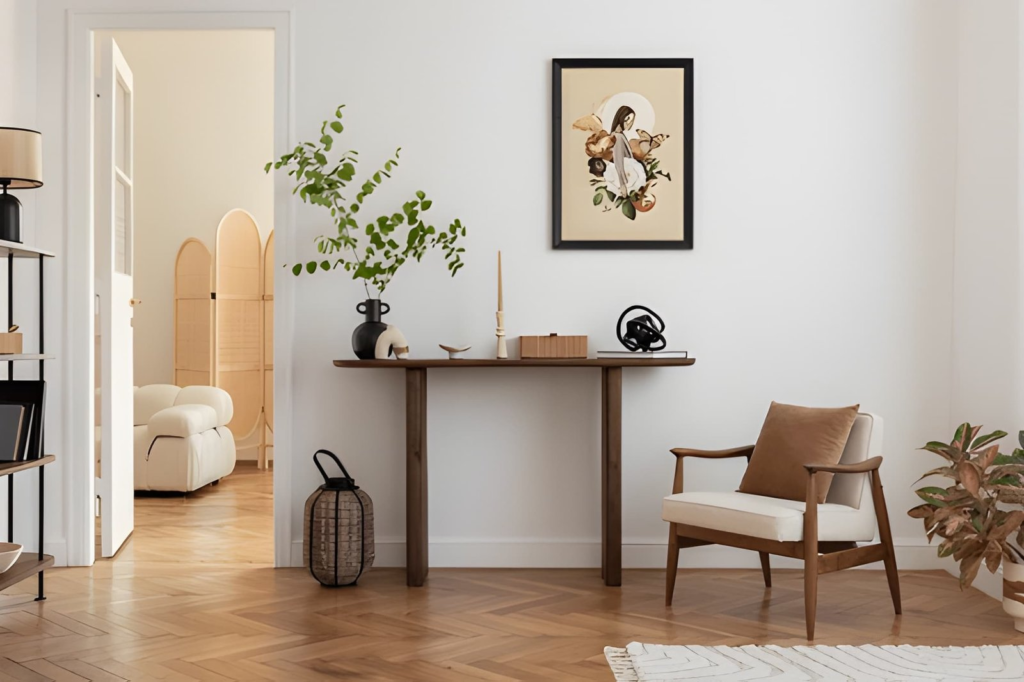
Most people who want better-looking rooms are not starting from zero. They already have a couch, some art on the walls, a lamp they like. The problem is that no one ever told them why certain rooms feel right and others just… don’t. At MintPalDecor, we’ve worked through enough real homes to know the answer usually comes down to five fundamentals: color, scale, light, focal points, and restraint. This guide covers all five. Not in a vague “trust your instincts” way, but with concrete rules that work whether you’re redoing a studio apartment in Chicago or refreshing a living room in Phoenix. If you’ve ever stood in a room that felt off and couldn’t put your finger on why, you’re in the right place. Learning how to be better at interior design with MintPalDecor starts here.
1. How to Be Better at Interior Design: Start With Color Ratios, Not Color Names
Most design mistakes don’t come from choosing the wrong color. They come from using too many colors with no plan for how much of each. The fix is the 60-30-10 rule, and once you see it you can’t unsee it.
| Layer | Percentage | Where It Goes | Example |
| Dominant | 60% | Walls, large sofa, rugs | Warm white, greige, navy |
| Secondary | 30% | Curtains, accent chairs, bedding | Sage green, terracotta, slate blue |
| Accent | 10% | Throw pillows, art, small accessories | Mustard, rust, deep teal |
The dominant color sets the mood. The secondary gives it character. The accent is where personality lives. Flip those proportions and rooms start to feel busy or flat. Keep them and even a modest budget can produce a coherent, put-together space.
Quick test: Take a photo of your room and squint at it. If three or more colors jump out at equal intensity, your accents are fighting for attention instead of supporting the palette.
2. Furniture Layout: Measure Before You Buy, Always
Scale is where well-intentioned rooms fall apart. A sofa that’s four inches too wide turns a living room into a corridor. A coffee table that’s too small for the seating group makes the whole arrangement look unfinished. The rule of thumb: your coffee table should be roughly two-thirds the length of your sofa.
| Room Element | Common Sizing Mistake | Better Guideline |
| Coffee table | Too small for sofa | ~2/3 the sofa length; 12–18 in. from sofa |
| Area rug | Too small, “floating” furniture | Front legs of all seating on the rug minimum |
| Dining table | Too large for room clearance | 36 in. clearance on all sides for chair pull-out |
| Artwork | Hung too high | Center at 57–60 in. from floor (eye level) |
| Bedside tables | Too short or too tall | Level with or within 2 in. of mattress top |
Before anything else, tape out your furniture’s footprint on the floor. It takes 20 minutes and saves a return shipment. Free apps like Roomstyler let you do this digitally if you prefer.
3. Lighting Is the Most Underused Tool in Any Room
Overhead lighting is functional. It is not design. Rooms that rely on a single ceiling fixture look like waiting rooms after 5pm. Good rooms layer three types of light, and each one does a different job.
| Lighting Type | Purpose | Examples |
| Ambient | General illumination | Ceiling fixtures, recessed lights, chandeliers |
| Task | Focused light for activity | Reading lamps, under-cabinet lights, desk lamps |
| Accent | Drama, depth, focal point emphasis | Picture lights, LED strip lights, sconces |
Put everything on dimmers if you can swing it electrically. Being able to dial ambient light down by 40% when you turn on two table lamps changes the feel of a room more than a paint color ever will. Warm bulbs (2700–3000K) work in living rooms and bedrooms. Cool white (3500–4000K) suits kitchens and home offices.
4. Every Room Needs One Focal Point
A focal point is the first thing your eye lands on when you walk in. If a room doesn’t have one, your eye wanders and the space feels unsettled. If it has three competing ones, same problem.
Common focal points: a fireplace, a large window with a view, a statement wall, a piece of oversized art, an architectural feature like exposed brick. The rest of the room should support that anchor, not compete with it. Arrange seating to face or frame the focal point. Use lighter colors or lower visual weight on the surrounding walls.
In a room where the focal point is unclear, the fastest fix is usually one large piece of art hung on the wall your eye naturally goes to. Scale matters here: a gallery wall works, but a single bold piece sized to the wall reads more confidently in most spaces.
5. Edit More Than You Add
The single habit that separates people who are genuinely good at interior design from people who mean well is restraint. Most rooms that feel crowded or chaotic got that way through accumulation, not a single bad decision.
The editing method that works: remove everything from a surface or zone down to zero, then add back only items that pass a simple test. Does this add visual interest, serve a function, or connect to the room’s palette? If no on all three, it stays in the box.
Odd numbers (3, 5) work better than even groupings in most vignettes. Vary the height within groupings so the eye has somewhere to travel. And leave negative space. Empty surfaces are not wasted. They make what’s there read more clearly.
How to Be Better at Interior Design MintPalDecor: Quick-Reference Summary
| Principle | Core Rule | Most Common Mistake to Avoid |
| Color | 60-30-10 rule across dominant, secondary, accent | Using 5+ colors at equal intensity |
| Scale | Measure before buying; front legs on rug minimum | Undersized rugs, oversized sofas |
| Lighting | Layer ambient + task + accent; use dimmers | One overhead fixture doing all the work |
| Focal Point | One clear anchor per room | Three competing statement pieces |
| Editing | Remove to zero, add back only what earns its place | Keeping every accessory “just in case” |
Frequently Asked Questions
How do I start getting better at interior design?
Start with your room’s proportions and a two or three color palette. Most design problems trace back to scale or color clutter, so fixing those two things first produces the biggest visible improvement before you spend anything.
How important is lighting in interior design?
Very. Layering ambient, task, and accent lighting can make the exact same room feel completely different. It’s one of the highest-leverage changes you can make, and it doesn’t require renovating anything.
Do I need to hire a professional interior designer?
Not necessarily. For full renovations or high-end projects, a professional saves time and avoids costly mistakes. For styling and refreshing existing rooms, the fundamentals in this guide get most people 80% of the way there on their own.
Contact us for more designs.