 Jessica
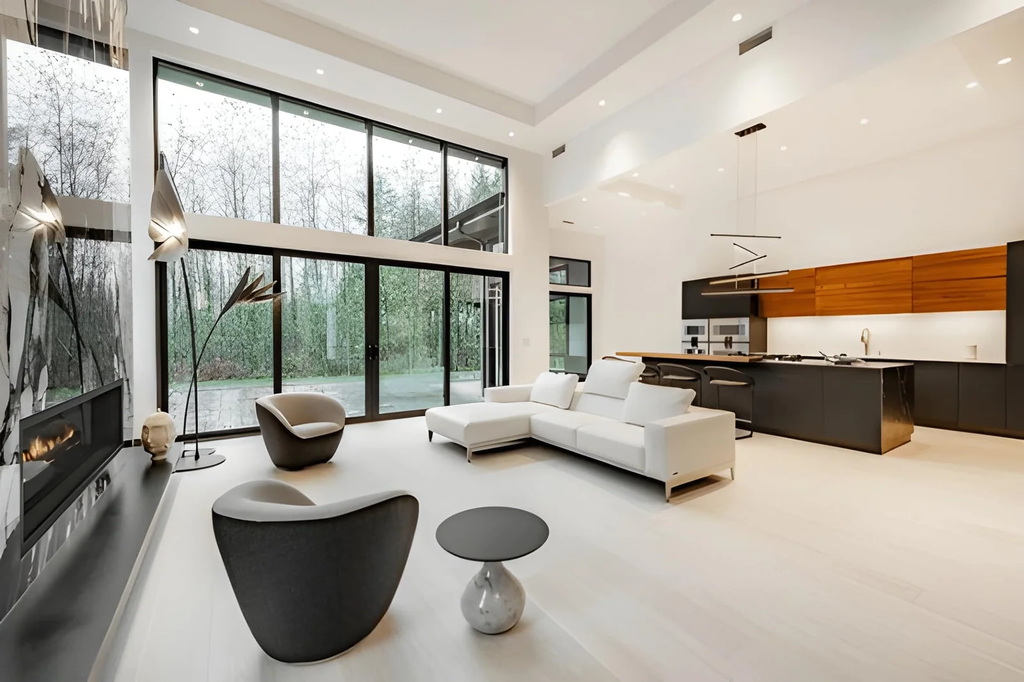
Of all the interior design styles available to US homeowners, contemporary is simultaneously the most popular and the most misunderstood. It gets confused with minimalism — which it isn’t. It gets confused with modern — which is a related but distinct style from a specific historical period. It gets described as “clean lines and neutral colors” in a way that makes it sound like interior designing stripped of personality, which is the opposite of what good contemporary spaces actually feel like.
Contemporary interior designing is not a fixed aesthetic. It’s a living one — defined by what’s current, what’s evolving, and what reflects the way people actually want to live right now rather than what was fashionable in a particular decade. It borrows from multiple influences, adapts to different home configurations, and works for a wider range of personalities than its reputation suggests.
This article covers what contemporary interior designing actually is and isn’t, which characteristics define it in practice, who it genuinely suits and who it doesn’t, how it performs in different US home types, and how to know whether it’s the right match for your personality and lifestyle before committing to it.
What Contemporary Interior Designing Actually Is
The confusion between contemporary and modern interior designing is persistent and worth resolving directly. Modern interior designing refers to a specific historical style — roughly the 1920s through 1970s — characterized by clean lines, natural materials, and a rejection of ornament influenced by the Bauhaus movement. It’s a fixed aesthetic from a defined era.
Contemporary interior designing, by contrast, refers to what’s happening now. It’s not anchored to a decade — it shifts with time, incorporating current influences while maintaining certain consistent principles: visual clarity, intentional contrast, quality over quantity, and a preference for spaces that feel purposeful rather than accumulated.
| Feature | Contemporary Interior Designing | Modern Interior Designing | Traditional Interior Designing |
|---|---|---|---|
| Time reference | Current — evolves continuously | Historical — 1920s–1970s | Historical — pre-20th century influences |
| Color palette | Neutral base with intentional accents | Warm neutrals, natural materials | Rich, layered, pattern-heavy |
| Ornamentation | Minimal but deliberate | Virtually none | Substantial and structural |
| Furniture form | Clean lines, mixed materials | Low profile, functional forms | Carved, upholstered, ornate |
| Texture approach | Layered through materials | Natural texture, limited layering | Pattern and textile layering |
| Personality fit | Design-conscious, evolving taste | Purist, historically aware | Comfort-oriented, traditional values |
The Defining Characteristics of Contemporary Interior Designing
Visual Clarity Without Sterility
The defining tension in contemporary interior designing is between visual clarity — spaces that don’t feel cluttered or overcrowded — and warmth, which prevents clarity from becoming coldness. Getting this balance right is what separates contemporary spaces that feel genuinely inviting from ones that feel like commercial showrooms.
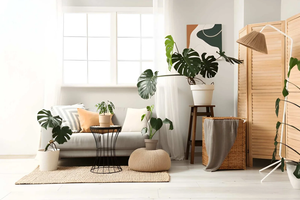
Visual clarity in contemporary interior designing comes from editing: fewer objects, more considered placement, clear sightlines. Warmth comes from material choice and texture layering — natural wood, warm-toned stone, linen and wool textiles, plants, and carefully chosen artwork that adds specificity without visual noise.
Intentional Contrast as a Design Tool
Contemporary interior designing consistently uses contrast as a primary tool — not to create drama for its own sake, but to give rooms visual energy and prevent the clean aesthetic from reading as bland. A dark accent wall in an otherwise light room. A rough stone surface against smooth plaster. A warm-toned wood floor under cool-grey furniture.
This use of contrast is one of the clearest markers of genuine contemporary interior designing versus a room that’s simply neutral and unresolved. Neutral without contrast is unfinished. Neutral with deliberate contrast is designed.
| Contrast Type | Example | Effect on Space |
|---|---|---|
| Light vs. dark | White walls, dark accent wall | Creates focal point, adds depth |
| Smooth vs. textured | Polished concrete, raw wood | Adds tactile interest, prevents sterility |
| Warm vs. cool | Warm wood floor, cool grey upholstery | Creates visual tension and balance |
| Organic vs. geometric | Curved sofa, grid-pattern rug | Softens otherwise rigid aesthetic |
| Matt vs. gloss | Matt walls, gloss cabinetry | Adds dimension without color contrast |
Quality Over Quantity in Material Selection
Contemporary interior designing operates on a consistent principle: fewer, better materials rather than more varied ones. A kitchen with two materials — matte white cabinetry and warm oak shelving — reads as more sophisticated than one with five competing finishes, regardless of individual quality.
This applies to furniture selection equally. One well-chosen sofa in quality fabric outperforms a room filled with several lesser pieces. The budget logic follows: spend more on fewer things that will remain relevant as the aesthetic evolves.
Who Contemporary Interior Designing Actually Suits
Contemporary interior designing is often positioned as a style for everyone — which means it’s usually described in ways too generic to be useful. In practice, it suits specific personality types and lifestyle patterns more than others.
It genuinely suits:
People who find visual clutter stressful rather than cozy. People who prefer their homes to feel purposeful rather than decorative. People who update their spaces regularly and prefer a framework flexible enough to absorb changes without requiring full redesigns. People who invest in quality pieces and prefer those pieces to remain relevant over time.
It doesn’t suit:
People who feel at home surrounded by collected objects and pattern. People whose homes function primarily as family spaces with young children, where the practicality of light upholstery and uncluttered surfaces is at odds with daily reality. People who feel warmth primarily through maximalist layering rather than material quality.
| Lifestyle Factor | Contemporary Interior Designing Fit |
|---|---|
| Adults-only or empty-nest household | Very High |
| Family with young children | Low-Medium — practicality conflicts |
| Entertainer who hosts frequently | High — spaces read as impressive and composed |
| Work-from-home professional | High — visual clarity supports focus |
| Collector of objects and art | Medium — selective display works, maximalism doesn’t |
| Comfort-first decorator | Medium — depends on material choices |
| Design-engaged homeowner | Very High — rewards intentional decision-making |
| Homeowner who rarely updates | Medium — style evolves, spaces may need updating |
How Contemporary Interior Designing Performs in Different US Home Types
Not every home configuration is equally suited to contemporary interior designing. The style’s strengths — visual clarity, clean lines, material quality — perform differently depending on the home’s architecture.
| Home Type | Contemporary Interior Designing Performance | Key Consideration |
|---|---|---|
| Open-plan new construction | Excellent | Style built for this configuration |
| Older home with period details | Good with adaptation | Contrast between period architecture and contemporary is intentional |
| Small urban apartment | Excellent | Visual clarity prevents small spaces from feeling cramped |
| Traditional colonial or craftsman | Requires careful application | Ornate architecture needs contemporary to be warmer than usual |
| Suburban family home | Good in adult-primary spaces | Main living areas work well; family rooms need adaptation |
| Loft or converted space | Excellent | Industrial bones complement contemporary aesthetic naturally |
The older home with period details deserves specific attention because it’s the configuration where contemporary interior designing most surprises people — in a good way. The contrast between ornate moldings, original hardwood floors, and contemporary furniture and fixtures creates a tension that reads as sophisticated and intentional rather than incongruous.
Frequently Asked Questions
What is contemporary interior designing and how is it different from modern?
Contemporary interior designing refers to design that reflects current trends and sensibilities — it’s not fixed to a historical period. Modern interior designing refers specifically to the design movement of the 1920s through 1970s characterized by Bauhaus-influenced forms, natural materials, and rejection of ornamentation. Contemporary evolves; modern is historical. Both favor clean lines and visual clarity, but contemporary is warmer and more flexible in its material and color application.
Is contemporary interior designing too cold for a family home?
It can be if applied without adaptation. The clarity that defines contemporary interior designing becomes sterility when warmth isn’t introduced through material choice — natural wood, soft textiles, plants, and warm-toned lighting. Families with young children often find the style’s preference for light upholstery and minimal objects impractical in high-use spaces, though it works well in adult-primary rooms like primary bedrooms and home offices.
How much does contemporary interior designing typically cost?
More than styles that rely on decorative accumulation, less than styles requiring custom millwork or ornamental architectural details. Contemporary interior designing invests in fewer, better pieces — quality upholstery, natural stone, solid wood — rather than volume of objects. The budget trades breadth for depth, which can be more or less expensive than alternative approaches depending on how many pieces are involved.
Can I incorporate contemporary interior designing if my home has traditional architecture?
Yes — and the contrast often produces better results than matching the architecture with traditional design. Contemporary furniture against period architectural details creates a layered, sophisticated aesthetic that reads as more intentional than a room that simply matches its shell. The key is treating the contrast as deliberate rather than trying to reconcile the two aesthetics into something homogeneous.
What’s the most common mistake in contemporary interior designing?
Removing warmth in pursuit of visual clarity. Contemporary interior designing is not minimalism — it doesn’t benefit from eliminating textiles, natural materials, and personal objects. The mistake is stripping the warmth that prevents clarity from becoming coldness, leaving rooms that feel institutional rather than designed. Material quality and texture layering are what separate good contemporary interior designing from a cold, empty space.
The Bottom Line
Contemporary interior designing is a genuine match for US homeowners who value visual clarity, invest in quality over quantity, and want spaces that feel current and purposeful rather than accumulated over time. It’s not a match for everyone — it asks for ongoing editing, material investment, and a tolerance for spaces that prioritize composition over comfort in the maximalist sense.
The question worth asking before committing to it isn’t whether it looks good in other people’s homes. It’s whether it reflects how you want to feel in your own — and whether your daily life and household patterns can sustain the discipline it rewards.
For the right person in the right home, contemporary interior designing doesn’t just work. It feels exactly right.
For contemporary interior designing must visit https://designmode24.co/