 Jessica
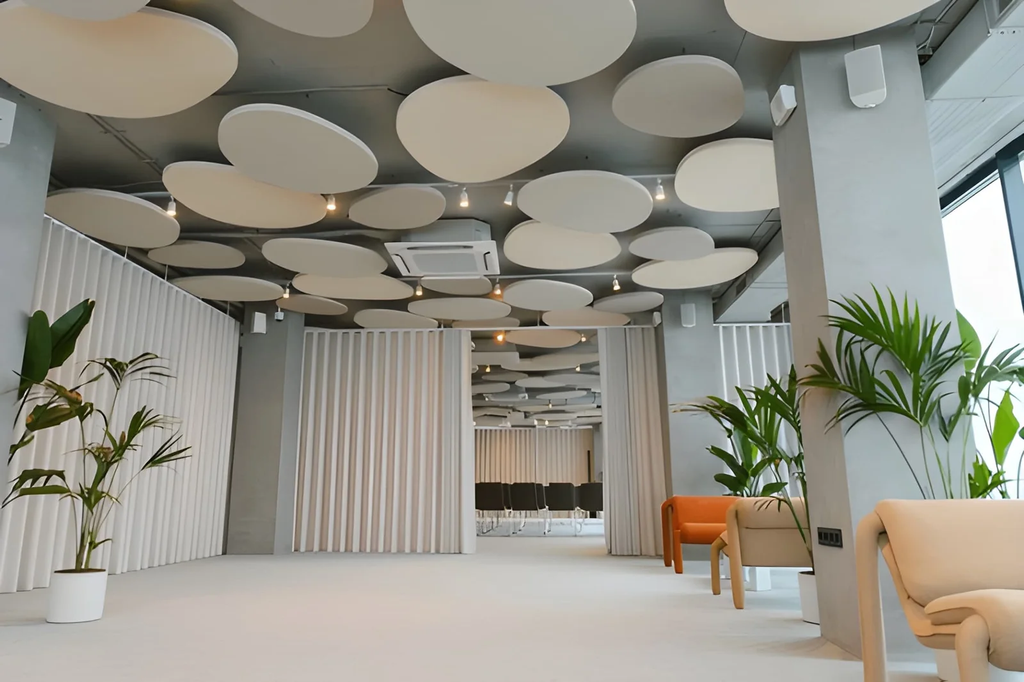
The ceiling is the one surface in a room that every person in it can see from every position — standing, sitting, lying down. It covers more square footage than any single wall. It determines how a room’s proportions feel, how sound behaves, how light distributes, and whether the space reads as architecturally complete or unfinished. And in the vast majority of US homes, it receives exactly one design decision: flat white paint.
This is a significant missed opportunity. Ceiling designs are the most consistently overlooked design tool available to US homeowners — partly because they’re out of reach and therefore out of mind, and partly because the idea of doing something deliberate to a ceiling feels more architectural than most homeowners assume they can access without professional help or major renovation budgets.
Neither assumption is accurate. The range of ceiling designs available to US homeowners spans from zero-cost paint changes to moderate millwork additions to significant architectural investments — and every level of intervention produces a visible, meaningful change in how the room below it looks and feels. This article covers the full range: what ceiling designs do to interior spaces, which specific approaches work in which rooms, and how US homeowners can access the benefits without necessarily taking on a major project.
What Ceiling Designs Actually Do to Interior Spaces
Before covering specific ceiling designs, understanding what the ceiling is doing spatially and perceptually in any room reveals why changes to it produce such significant effects.
| Ceiling Design Choice | Effect on Room Perception | Secondary Effect |
|---|---|---|
| Flat white (default) | Neutral — ceiling recedes, not noticed | Room’s architectural quality undefined |
| Painted darker than walls | Ceiling lowers perceived height — intimate | More focused, enclosed feel |
| Painted lighter than walls | Ceiling rises perceived height — airy | More expansive, open feel |
| Painted same color as walls | Envelope effect — room feels sculptural | Bold, contemporary, no visual boundary |
| Coffered ceiling | Adds perceived height through depth variation | Architectural quality, formal character |
| Exposed beams | Lowers ceiling visually, adds texture and warmth | Rustic, organic, historical reference |
| Barrel vault | Adds volume and height, directs the eye | Dramatic, distinctive, architectural journey |
| Tray ceiling | Creates depth variation, frames the room | Elevates perceived design quality |
| Decorative plasterwork | Adds visual richness, historical reference | Formal, classical, collector-quality feel |
Ceiling Designs That Transform Rooms Without Major Construction
Painted Ceiling Designs: The Highest-ROI Intervention
The most accessible ceiling design change available — and the one most consistently underestimated by US homeowners — is paint. A ceiling painted in a considered color rather than default white changes the room’s proportional reading, its atmosphere, and its design identity in ways that no single wall treatment achieves.
Dark-painted ceilings are the most dramatically impactful painted ceiling design currently in use across US interiors. A ceiling painted in deep navy, forest green, charcoal, or burgundy in a room with white or light walls creates an intimate, enveloping quality — the room feels like a jewel box rather than a white box. The psychological effect is similar to sitting under a tree canopy: enclosed above, open around, genuinely restful.
The design principle: dark ceilings work best when the walls are significantly lighter, which maintains the contrast that makes the ceiling read as a deliberate design decision rather than a dark mistake.
Tonal ceiling designs — painting the ceiling in the same color family as the walls but slightly lighter or darker — create a more subtle effect that reads as sophisticated rather than dramatic. A warm grey ceiling above warm grey walls (ceiling two shades lighter) produces a room that feels intentionally considered without making the ceiling the primary visual statement.
| Painted Ceiling Design | Color Approach | Best Room Application | Atmosphere Created |
|---|---|---|---|
| Dark ceiling, light walls | High contrast — ceiling becomes feature | Dining rooms, bedrooms, studies | Intimate, enveloping |
| Light ceiling, dark walls | Ceiling recedes — walls are feature | Living rooms with bold wall color | Balanced, sophisticated |
| Same color as walls (envelope) | No contrast — room becomes volume | Hallways, powder rooms, bold statements | Dramatic, sculptural |
| Warm white (vs. cool white) | Subtle warmth — not a feature | Any room wanting improvement without boldness | Warmer, more resolved |
| Ceiling painted to match floor | Unexpected — floor and ceiling connect | Contemporary, specific aesthetic contexts | Architectural, brave |
Beamed Ceiling Designs: Structural or Decorative
Exposed beams are among the most character-defining ceiling designs available — and they exist in two genuinely different categories that are worth distinguishing.
Structural exposed beams are existing load-bearing timber or engineered lumber that’s been left visible or revealed through removing a dropped ceiling. These have authentic material presence — real wood grain, real dimension, real history — that decorative alternatives can approximate but never fully replicate.
Decorative beam ceiling designs — lightweight hollow beams applied to an existing flat ceiling — provide the visual language of exposed timber at a fraction of the cost and without structural implications. Quality faux beams in polyurethane or real wood veneer are significantly more convincing than they were a decade ago, particularly when painted rather than stained (painting removes the visual cues that distinguish solid from hollow).
The installation cost differential is significant: structural beam exposure during renovation varies widely based on what’s above the ceiling, while decorative beam application typically costs $500 to $2,500 for a room in materials and labor.
Coffered Ceiling Designs: The Formal Architectural Statement
Coffered ceilings — a grid of recessed panels created by intersecting beams or molding — are among the most formally architectural ceiling designs available in US residential design. They add perceived height (the depth of the coffers creates dimensional variation that the eye reads as height), historical gravitas, and a quality of design investment that flat ceilings simply can’t communicate.
Contemporary coffered ceiling designs have moved beyond the traditional painted-all-white approach into more nuanced applications: two-tone treatments where the coffers are one color and the ceiling plane is another, simplified grid patterns with fewer divisions that read as contemporary rather than traditional, and integration with recessed lighting that positions fixtures within the coffered grid.
The cost range for coffered ceiling designs in US homes runs from $2,000 to $8,000+ depending on room size, coffer depth, and finish quality — a meaningful investment that produces a permanent architectural upgrade.
Ceiling Designs by Room: What Works Where
| Room | Ceiling Design Challenge | Recommended Approach | Why It Works |
|---|---|---|---|
| Living room | Default flat white, no design interest | Tray ceiling or dark painted ceiling | Creates focal depth or intimate envelope |
| Dining room | Needs definition over table | Pendant integration + painted or coffered treatment | Defines zone, creates occasion quality |
| Primary bedroom | Intimate atmosphere needed | Dark ceiling, barrel vault, or tray with lighting | Enclosure above promotes rest |
| Kitchen | Functional priority, often low clearance | Painted ceiling (same as walls) or simple beams | Warmth without complexity |
| Bathroom | Small scale, high impact | Ceiling in wall color or wallpaper extended to ceiling | Jewel-box effect in contained space |
| Hallway | Often ignored transitional space | Barrel vault or paint treatment | Creates journey quality |
| Home office | Focus-supporting environment | Dark or tonal ceiling | Enclosure promotes concentration |
Ceiling Designs and Light: The Critical Relationship
Every ceiling design decision affects how light behaves in the room — and this relationship is often more consequential than the visual effect of the ceiling design itself.
Dark ceiling designs absorb light. This is what creates their intimate quality — but it also means the room needs adequate artificial lighting to function at full brightness when needed. Dark ceilings pair best with multiple light sources at different heights (wall sconces, floor lamps, table lamps) rather than relying on a central overhead fixture that the dark ceiling will absorb.
Light ceiling designs reflect light throughout the room, making the space brighter with less artificial illumination. The tradeoff is that every light source is reflected from the ceiling — including unflattering overhead fixtures — which can produce a clinical, flat quality if the only light source is overhead.
Coffered and beamed ceiling designs create light and shadow patterns that add visual dimension to the room — particularly when recessed fixtures are positioned within coffered panels to create deliberate shadow at the panel edges. This is the lighting design principle that makes coffered ceilings look professional rather than merely structural.
Frequently Asked Questions
What’s the most impactful ceiling design for a standard US home?
A dark-painted ceiling in a dining room or bedroom — specifically a deep navy, forest green, or warm charcoal above white or light walls. This transformation costs one gallon of paint and an afternoon, produces an immediately dramatic change in how the room reads, and consistently generates more positive response from visitors than any other single design change at comparable cost.
Do ceiling designs make rooms feel smaller?
Depending on the treatment, they can make rooms feel smaller (in a positive, intimate way) or larger (through height emphasis or tray depth). Dark ceiling designs reduce perceived height — which is often experienced as coziness rather than compression. Coffered and tray designs add perceived height through dimensional depth. The effect on perceived size depends on whether the ceiling design emphasizes the horizontal or vertical dimension of the space.
What are the most affordable ceiling designs that still make a significant impact?
Paint is the highest-ROI option. Stenciled geometric patterns on a flat ceiling cost $15 to $50 in materials and transform a plain surface into a significant design feature. Decorative ceiling medallions around light fixtures cost $20 to $80 and add architectural character to any ceiling. And wallpaper applied to the ceiling — increasingly common in contemporary US design — costs $50 to $200 for a small room and produces one of the most distinctive ceiling designs available at any price point.
Are ceiling designs something a homeowner can do themselves?
Painting, certainly — ceiling painting is manageable for any motivated homeowner with appropriate rollers and drop cloths. Stenciling is achievable with patience and the right tools. Decorative beam installation in lightweight polyurethane is a feasible DIY project for homeowners comfortable with basic carpentry. Coffered ceilings and structural beam exposure are professional projects. The gradient of ceiling designs from fully DIY to professional-required means there’s an accessible option at every skill and budget level.
How do ceiling designs affect resale value?
Quality ceiling designs that are well-executed and appropriate for the home’s style and price point consistently add perceived value. Coffered ceilings and exposed beams test particularly well with buyers across demographics. Dark-painted ceilings are more polarizing — buyers who love them respond enthusiastically, while those who don’t may view them as a painting project. In general, ceiling designs that demonstrate architectural investment and quality workmanship are treated as upgrades; ceiling designs that appear amateurish or maintenance-intensive are treated as liabilities.
The Bottom Line
Ceiling designs are the most consistently underused design tool in US residential interiors — which means they represent one of the most significant available opportunities for homeowners who want to differentiate their spaces from the standard flat-white-ceiling default.
A dark-painted ceiling costs one gallon of paint and produces immediate dramatic results. Decorative beams add architectural character for $500 to $2,500. A coffered ceiling produces a permanent architectural upgrade for $2,000 to $8,000. Each level of investment produces a proportional change in the room’s character — and each change is more impactful than most same-budget interventions on walls, floors, or furniture.
Look up. The most underrated design surface in your home has been waiting for a decision.
Must visit https://designmode24.co/ for interior ceiling designs.