 Jessica
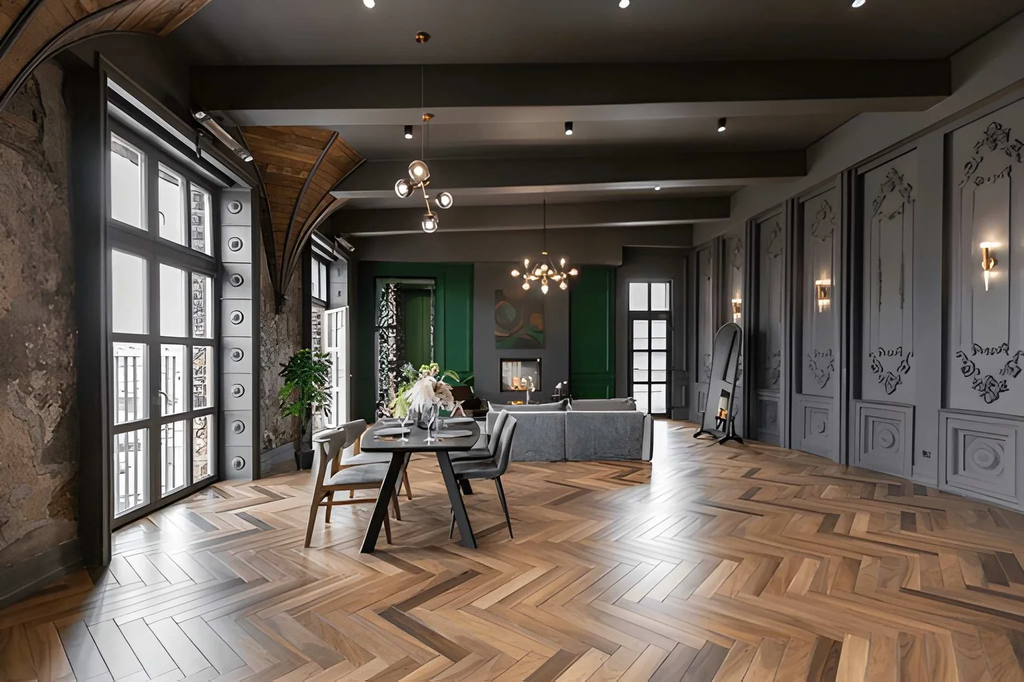
Walk into a room with a herringbone floor, a hexagon tile wall, or a ceiling of repeating timber slats, and you feel the space before you can describe it. The lines pull your eye forward, the rhythm slows or speeds your steps, and the room seems taller, wider, or more enclosed. None of this comes from furniture. It comes from pattern. So how can geometric patterns influence interior architecture?
Geometric patterns work on the structure of a room, not just its decoration. They can stretch a hallway, lower a ceiling, calm a busy wall, or define a zone without building anything. This article explains how, in practical terms. You will find a quick answer, a table of pattern effects, a guide to where patterns belong in a building, a scale and repetition chart, a simple planning method, and the mistakes that make a pattern overwhelming. It suits apartments, new builds, and renovations. Read the quick answer first, then use the sections that fit your project.
How Can Geometric Patterns Influence Interior Architecture?
Geometric patterns influence interior architecture by directing the eye, changing perceived proportions, and defining zones. Horizontal lines widen a room, vertical lines raise it, and diagonals add movement. Repeating shapes create rhythm and unity, while large, bold patterns can anchor a space or become a focal point without any structural change.
What Each Pattern Does to a Room
| Pattern | Visual effect | Best use |
|---|---|---|
| Horizontal stripes | Widens, calms | Narrow rooms, long walls |
| Vertical lines | Adds height | Low ceilings, slim alcoves |
| Diagonals and herringbone | Adds energy, leads the eye | Floors, entryways |
| Hexagons | Soft, organic geometry | Bathrooms, kitchen walls |
| Squares and grids | Order, stability | Floors, shelving, windows |
| Circles and arcs | Softens hard corners | Mirrors, lights, rugs |
| Triangles and chevrons | Direction, drama | Feature walls, tiles |
These are general visual effects, and results depend on scale, color contrast, and lighting.
Where Geometric Patterns Belong in a Building
Patterns carry the most architectural weight when they sit on large, structural surfaces.
| Surface | What a pattern can do | Example |
|---|---|---|
| Floor | Guides movement, marks zones | Herringbone leading to the living area |
| Feature wall | Creates a focal point | Hexagon tile behind a bed or range |
| Ceiling | Changes perceived height | Slats or coffers in a repeating grid |
| Screens and partitions | Divides without blocking light | Timber or metal lattice |
| Windows and glazing | Controls light and view | Grid frames, patterned glass |
| Stairs | Adds rhythm | Repeating balustrade shapes |
A floor pattern influences the whole room, because it is the biggest surface you see from standing height. If you want tiles or panels to test these ideas, you can browse [anchor text] before you decide on a layout.
Scale, Contrast, and Repetition
The same shape can calm or overwhelm a room depending on three variables.
| Variable | Subtle result | Strong result |
|---|---|---|
| Scale | Small pattern reads as texture | Large pattern reads as a statement |
| Contrast | Tone-on-tone feels quiet | Black and white feels graphic |
| Repetition | Even spacing feels ordered | Irregular spacing feels playful |
A useful rule is to keep one element bold and the others quiet. A strongly patterned floor works best with plain walls, while a bold feature wall needs a calm floor.
A Simple Planning Method
- Choose the job. Decide whether the pattern should widen, lift, define, or soften the room.
- Pick one surface. Floor, feature wall, or ceiling. Do not start with all three.
- Match the shape to the mood. Soft curves for relaxed spaces, strong angles for dynamic ones.
- Test at scale. Tape out the shape or view a large sample in your own light.
- Repeat the shape once. Echo it in a mirror, light, or rug so it feels connected.
- Edit. If the room feels busy, remove one patterned element.
Cultural and Historical Roots
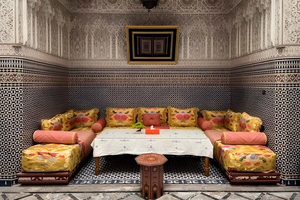
Geometric patterns have a long architectural history. Islamic tilework, Art Deco facades, and mid-century screens all used repeated shapes to organize space and light. Learning from these traditions helps you see why certain patterns feel timeless. If you borrow from a specific tradition, research its meaning and use it respectfully.
Practical and Safety Considerations
Patterns affect function as well as looks. Busy floor patterns can hide small hazards on stairs, so keep steps clear and well lit. Grout lines on tile need regular cleaning, and tight patterns can show uneven installation. High-contrast patterns may be hard for some people with visual impairments to navigate, so test the effect in different lighting. Always use a qualified installer for structural elements or ceiling features.
Mistakes That Make a Pattern Overwhelming
The most common mistake is using several bold patterns at once. Choose one hero and keep the rest plain. Another is the wrong scale: a tiny pattern on a huge wall disappears, while a giant one in a tiny room swallows it. Ignoring lighting is a third issue, since shadows can exaggerate or flatten the effect. Finally, avoid following a trend that does not suit the building. A pattern should respect the room’s proportions and purpose.
FAQ
Can geometric patterns make a small room look bigger?
Yes, especially horizontal lines, light colors, and low-contrast patterns.
Which geometric patterns suit modern homes?
Clean grids, large hexagons, and subtle herringbone suit contemporary spaces.
Are geometric patterns hard to install?
Some, such as herringbone and complex tile layouts, need skilled installers and extra material.
Can I mix different patterns?
Yes, if they share a color or scale relationship. Keep one pattern dominant.
Bottom Line
Geometric patterns influence interior architecture by changing perceived size, guiding movement, and defining zones. Choose one surface, match the shape to the mood, control scale and contrast, and repeat the shape once. Used with restraint, a pattern can do the work of a wall.
Must visit https://designmode24.co/ for geometric patterns.