
 Jessica
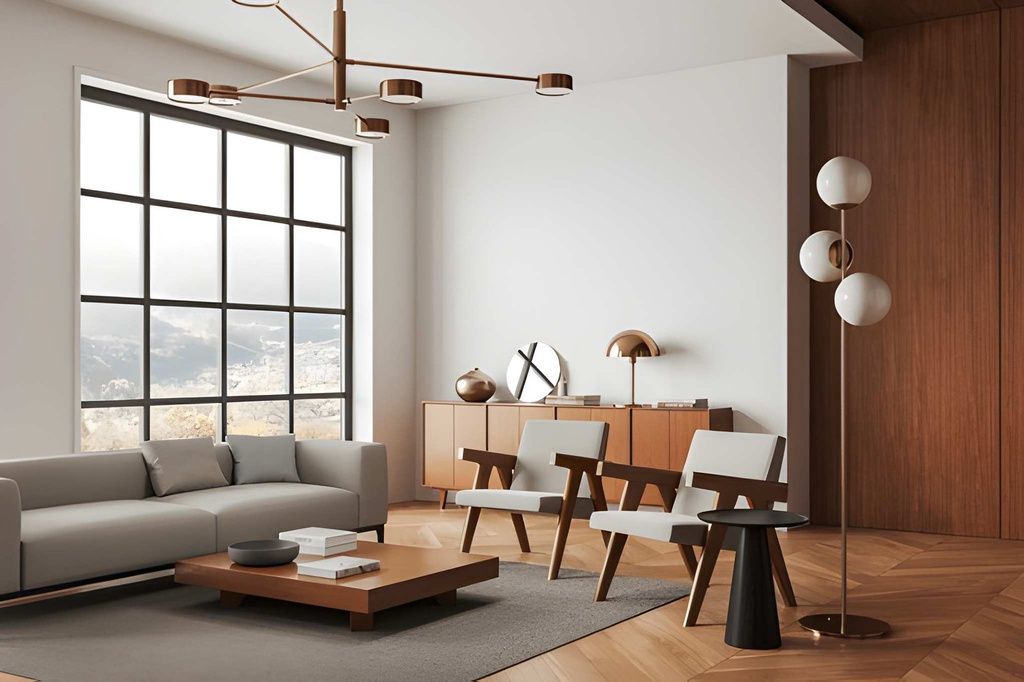
There’s a specific feeling most American homeowners know well. The room has furniture. It has art on the walls. It has a rug, throw pillows, lighting. And it still feels like something is missing — unresolved, slightly off, not quite there.
So you add something. Move something. Replace something. The feeling persists.
The question of how to know when a room is finished is one that professional designers get asked constantly — and the honest answer is more nuanced than most decorating advice admits. Some rooms are genuinely unfinished because specific elements are missing. Others feel unfinished because of a fixable imbalance in scale, light, or visual weight. And some feel unfinished because the person living in them keeps second-guessing choices that were actually correct.
Knowing the difference between these three situations is what separates a room that gets completed from one that gets perpetually tinkered with and never quite settled.
This guide covers the specific signals that tell you a room is finished, the signals that tell you it genuinely isn’t, and the most common reasons American homeowners keep adding to rooms that were done two purchases ago.
Why Rooms Feel Perpetually Unfinished
The feeling that a room isn’t finished is almost always caused by one of three things: a missing functional element, a visual imbalance, or decision fatigue that reads as dissatisfaction.
| Root Cause | What It Feels Like | How to Identify It |
|---|---|---|
| Missing functional element | Something specific feels absent — no reading light, no surface beside the sofa | You can name what’s missing when you sit in the room |
| Visual imbalance | Room feels heavy on one side, empty in another, or lacking depth | Sightlines feel uneven, eye has nowhere to rest |
| Decision fatigue | Everything is technically there but nothing feels committed | You keep moving things rather than adding things |
| Wrong scale | Furniture feels too small or too large for the space | Room looks furnished but not filled |
| Inconsistent style | Pieces don’t relate to each other visually | Room looks collected, not curated |
| Overlighting or underlighting | Room looks right in the day but wrong at night | Mood changes dramatically after dark |
Most rooms that feel perpetually unfinished are suffering from the third cause — decision fatigue — not from actually missing something essential.
How to Know When a Room Is Finished: The Real Signals
Signal 1: The Eye Has Somewhere to Rest
A finished room has a focal point — one element the eye naturally moves toward first when entering. It could be a fireplace, a piece of art, a well-dressed window, or a statement furniture piece. If the eye moves around the room without landing anywhere, the room isn’t finished regardless of how many things are in it.
The focal point test: stand in the doorway of the room. Where does your eye go first? If the answer is “nowhere specific” or “everywhere at once,” the room is missing its anchor.
Signal 2: Every Surface Has Intention
In a finished room, every surface — walls, floor, tabletops, shelves — is either occupied with intention or deliberately left empty. The difference between a surface that’s empty because it’s meant to be and one that’s empty because nothing has been placed there yet is usually visible: intentional emptiness feels calm, unresolved emptiness feels incomplete.
| Surface State | What It Signals | Action Needed |
|---|---|---|
| Occupied with purpose | Finished | None |
| Deliberately empty (breathing room) | Finished | None |
| Empty because nothing fits yet | Unfinished | Find the right element |
| Overcrowded, no breathing room | Unfinished | Edit and remove |
| Inconsistent — some surfaces done, some not | Unfinished | Complete the incomplete surfaces |
Signal 3: The Room Works at Night
This is the test most American homeowners skip — and it’s one of the most reliable indicators of whether a room is actually finished. A room that looks right during the day but feels cold, flat, or unwelcoming after dark has an unresolved lighting problem. Layered warm lighting is one of the last elements added to most rooms and one of the most commonly skipped.
Walk through the room at 8pm with only the lighting you’d normally use. If it feels wrong, the room isn’t finished — it needs another light source, a dimmer, or a bulb temperature change.
Signal 4: Nothing Feels Temporary
Every room has pieces that feel permanent and pieces that feel like placeholders. A finished room has resolved its placeholders — the folding chair that was “just for now,” the bare wall that’s been waiting for the right art, the lamp from a previous apartment that doesn’t quite fit. When everything in the room feels like it belongs there permanently, the room is finished.
For room-specific checklists that identify exactly which elements are commonly missing in American living rooms, bedrooms, and dining rooms, designmode24 interior design approaches completion as a diagnostic process rather than a subjective feeling.
The Finished Room Checklist
| Element | Finished State | Unfinished Signal |
|---|---|---|
| Focal point | Clear, intentional, draws eye on entry | Eye wanders, no anchor |
| Lighting | Layered, warm, works at night | Single source, feels flat after dark |
| Rug | Correct size, anchors furniture grouping | Too small, furniture floating off it |
| Wall coverage | Balanced — art, mirrors, or intentional negative space | Bare walls that feel empty not calm |
| Scale | Furniture proportional to room and each other | Pieces feel lost or cramped |
| Surfaces | Each one resolved with purpose or intentional emptiness | Mix of done and placeholder |
| Textiles | Layered — rug, curtains, pillows, throws | One or two textile layers missing |
| Negative space | Breathing room between elements | Overcrowded or too sparse |
When to Stop Adding Things
The most common mistake American homeowners make with rooms that feel unfinished is adding more things. More throw pillows. More art. More decorative objects. More plants. The room gets busier and still doesn’t feel finished — because addition was never the solution.
A room that feels unfinished despite having enough in it usually needs one of three things instead of more objects:
Editing — removing pieces that don’t belong rather than adding ones that might. A room with fifteen things that all fit together looks more finished than a room with twenty-five things that almost fit.
Commitment — stopping the rotation of pieces in and out and deciding what stays permanently. Rooms feel unfinished partly because their inhabitants treat them as works in progress. The decision to stop adjusting is itself part of finishing.
Patience — some rooms feel right after living in them for a few weeks. The unfamiliar reads as unfinished. Given time, a room that was actually done reveals itself.
Frequently Asked Questions
How long does it typically take to finish decorating a room?
There’s no standard timeline — but most interior designers working with clients on a single room complete the process in six to twelve weeks. Homeowners working independently often take six to eighteen months because decisions happen incrementally. A room that’s been “in progress” for over two years is almost always suffering from decision fatigue rather than genuine incompletion.
What is the last thing you should add to a room?
Lighting and art are typically the last two elements — lighting because it requires knowing the final furniture placement, art because it responds to everything else in the room. If either is missing or unresolved, the room isn’t finished regardless of how complete everything else feels.
Is it normal for a room to never feel completely finished?
For many people yes — but it’s worth distinguishing between healthy ongoing refinement and chronic dissatisfaction that no amount of decorating resolves. The former is normal. The latter usually indicates that the room’s foundational decisions (layout, scale, color) weren’t resolved correctly in the first place.
How do designers know when a room is done?
Most professional designers use a version of the focal point test and the night test described above, combined with a walkthrough that checks each surface for resolution. The subjective signal most designers cite is when the room stops competing for attention — when it recedes into the background and lets the people in it take over.
The Direct Answer
Knowing when a room is finished comes down to four tests: the eye has a clear focal point, every surface is resolved with intention, the room works at night under artificial light, and nothing feels temporary or placeholder. If all four pass, the room is done — even if it doesn’t feel that way yet.The feeling of incompletion often outlasts the actual incompletion. At some point the right move isn’t adding one more thing. It’s deciding the room is finished and letting yourself believe it.
for more room interior ideas visit https://designmode24.co/






1 thought on “How Do You Know When a Room Is Finished — or Is It Ever Really Done?”