 Jessica
Everything you’ve been told about ceiling color points in one direction: keep it white, keep it light, keep it safe. A white ceiling reflects light, makes rooms feel taller, and doesn’t draw attention to itself. That’s all true.
It’s also only half the story.
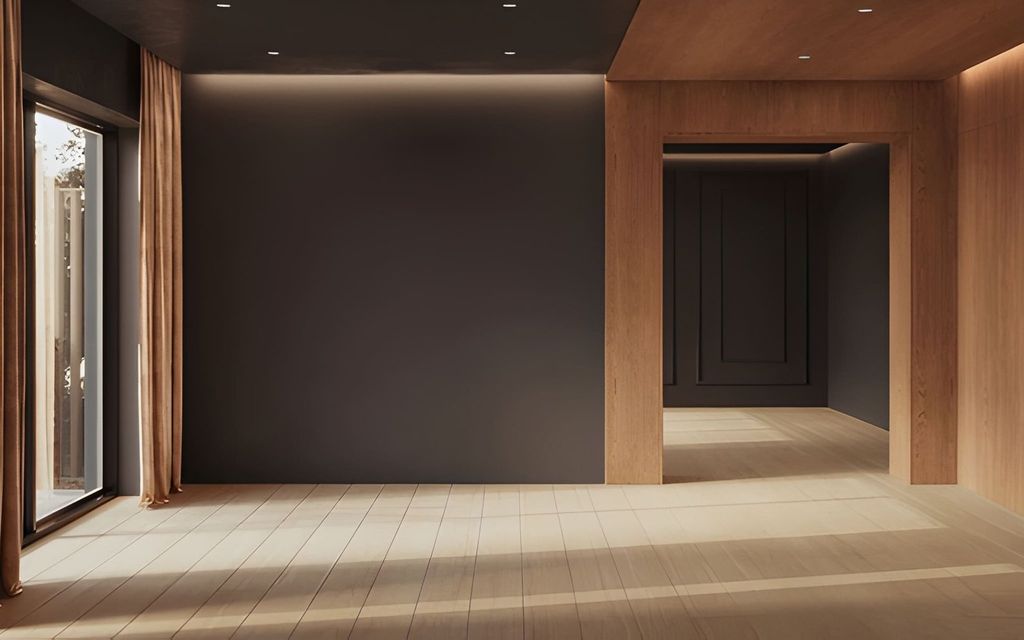
Painting your ceiling a dark color is one of the most misunderstood decisions in American interior design — dismissed by homeowners as risky and quietly used by designers as one of their most reliable tools for creating rooms that feel dramatic, intimate, and deliberately considered. The rooms that stop people in their tracks often have a dark ceiling. The rooms that feel like every other room usually have a white one.
The real question isn’t whether painting a ceiling dark is ever a good idea. It clearly is — the evidence is in virtually every high-end interior design publication in the US. The real question is when it works, when it backfires, and what conditions need to be in place before you open that can of navy or forest green.
This guide answers all three — with specific room conditions, color recommendations, and the mistakes that turn a bold ceiling into a regrettable one.
Why Dark Ceilings Work Against Conventional Logic
The standard ceiling advice is rooted in a legitimate principle: light colors reflect more light, which makes spaces feel larger and brighter. In a small room with low ceilings and limited natural light, a white ceiling does meaningful work.
But that principle assumes the goal is always to maximize perceived size and brightness. It isn’t — not in every room. Some rooms benefit from intimacy over openness. Some ceilings are already high enough that bringing them down visually improves the room’s proportions. Some spaces are bright enough that a dark ceiling adds the contrast and drama they’re missing.
| Ceiling Condition | White Ceiling Effect | Dark Ceiling Effect |
|---|---|---|
| Low ceiling (under 8 feet) | Maximizes perceived height | Compresses space — usually avoid |
| Standard ceiling (8–9 feet) | Safe, neutral | Works with right room conditions |
| High ceiling (10+ feet) | Can feel cold and cavernous | Brings ceiling down, adds intimacy |
| Room with abundant natural light | Reflects light well | Absorbs excess brightness, adds depth |
| Room with limited natural light | Best choice for light | Risky — darkens already dim space |
| Open-concept large room | Keeps space feeling open | Creates cozy zone within large space |
The pattern is clear: dark ceilings work best in rooms that are already bright, already tall, or specifically designed for intimacy rather than openness.
When Painting Your Ceiling a Dark Color Is Actually a Good Idea
High-Ceiling Rooms That Feel Cold
The most legitimate case for painting your ceiling a dark color is a room with ceilings above 10 feet that feel cavernous rather than grand. This is common in older American homes, loft-style apartments, and newer construction with vaulted ceilings.
A dark ceiling in a high-ceilinged room does something counterintuitive: it makes the room feel more human-scaled. The ceiling appears to sit lower — not uncomfortably so, but enough that the vertical space feels occupied rather than wasted. The room stops feeling like a warehouse and starts feeling like a place people want to be in.
Dining Rooms and Bedroom Sanctuaries
These are the two rooms in an American home where intimacy consistently beats openness as a design goal. A dining room with a deep navy or forest green ceiling feels like a place people linger. A bedroom with a dark ceiling — particularly above the bed — creates the cocoon effect that makes sleeping spaces feel genuinely restful.
Both rooms tend to be used primarily at night, under artificial light, which is exactly when dark ceilings perform best. The dynamic changes completely under artificial lighting — dark surfaces absorb light in a way that feels warm and enclosing rather than dim and oppressive.
Rooms With Strong Natural Light
A south-facing room with generous windows and strong afternoon light is one of the best candidates for a dark ceiling in the US. The abundant natural light prevents the room from feeling dim, while the dark ceiling adds visual weight and contrast that a white ceiling in the same room would lack entirely. For room-specific color guidance on dark ceiling applications in American homes by orientation and size, designmode24 interior design covers these combinations with precise detail.
When Painting a Ceiling Dark Backfires
| Room Condition | Why Dark Ceiling Fails | Better Alternative |
|---|---|---|
| Low ceiling (under 8 feet) | Makes room feel oppressive | Keep white or very light |
| Limited natural light | Darkens already dim space | Add lighting layers instead |
| Small room under 120 sq ft | Amplifies enclosed feeling | Light walls and ceiling both |
| Room with no layered lighting | Dark ceiling needs good light to work | Fix lighting first |
| North-facing room in cold climate | Already reads cold and dark | Warm white ceiling only |
| Basement room | Compounds underground feeling | Maximum LRV ceiling always |
The single biggest predictor of a dark ceiling failing is inadequate lighting. A dark ceiling in a room with layered, warm artificial lighting looks intentional and sophisticated. The same dark ceiling in a room with one overhead fixture looks like a mistake — because without enough light hitting it, it just reads as a dim, unfinished surface.
The Best Dark Ceiling Colors for American Homes
Not all dark colors work equally well on ceilings. The most reliable performers:
| Color Category | Example Shades | Best Room Application |
|---|---|---|
| Deep navy | Benjamin Moore Hale Navy, SW Naval | Dining rooms, home offices, bedrooms |
| Forest / sage green | BM Salamander, SW Jasper | Living rooms, sunrooms, kitchens |
| Charcoal / soft black | SW Tricorn Black, BM Wrought Iron | Bedrooms, media rooms, dramatic dining |
| Deep burgundy / wine | BM Pomegranate, SW Antique Red | Formal dining rooms, libraries |
| Warm dark brown | BM Chocolate Truffle, SW Kaffee | Bedrooms, studies, warm-toned rooms |
Finish matters as much as color. A flat or matte finish on a dark ceiling absorbs light and softens the effect — it’s the standard choice for most applications. A semi-gloss dark ceiling reflects light downward and reads as more dramatic — best reserved for dining rooms and spaces with very deliberate lighting setups.
Frequently Asked Questions
Does a dark ceiling make a room feel smaller?
In rooms with standard 8-foot ceilings and limited natural light, yes. In rooms with high ceilings or abundant natural light, a dark ceiling actually improves proportions by making the vertical space feel more human-scaled rather than cavernous.
What is the best dark color to paint a ceiling in a US bedroom?
Deep navy (Benjamin Moore Hale Navy or Sherwin-Williams Naval) and charcoal (SW Tricorn Black or BM Wrought Iron) consistently perform best in American bedrooms. Both create the cocoon effect that improves sleep environment quality without making the room feel oppressively dark.
Do you need special paint for a dark ceiling?
No special formulation is required, but ceiling paint in a flat or matte finish is recommended. Standard wall paint in a flat finish works well. Avoid eggshell or satin on ceilings — the slight sheen becomes visible and unflattering at ceiling angles.
How do you light a room with a dark ceiling correctly?
Layered warm lighting at multiple heights — floor lamps, table lamps, wall sconces — prevents a dark ceiling from making a room feel dim. The key is keeping light sources at eye level and below rather than relying on overhead fixtures that point directly at the dark surface.
The Direct Answer
Painting your ceiling a dark color is a genuinely good idea in specific conditions: high ceilings that feel cold, rooms with strong natural light, dining rooms designed for intimacy, and bedrooms meant to feel like sanctuaries. It fails in low-ceiling rooms, north-facing rooms with limited light, and any room without layered warm lighting to support it.
The white ceiling default isn’t wrong. But it isn’t always right either — and the rooms that people remember almost never played it completely safe.
for more painting ideas visit our website https://designmode24.co/