 Jessica
Walk into any hardware store in 2026 and the options feel endless. Cordless drills with app connectivity. Laser levels that self-calibrate. Stud finders that speak to your phone. The tools tech space for homeowners has exploded — and that’s actually the problem. More technology doesn’t automatically mean better repairs. It often means more money spent on features you’ll never use, sitting in a drawer next to the manual you never read.
This article cuts through the noise. Whether you’re patching drywall for the first time or rewiring an outdoor outlet, the right tools tech makes the difference between a job done safely and a weekend lost to YouTube rabbit holes. We’ll break down which technologies genuinely help, which are overhyped, and how to think about your tool kit as a system — not a collection of impulse buys. No fluff, no affiliate padding. Just what a US homeowner actually needs to know.
What “Tools Tech” Actually Means for Home Repairs
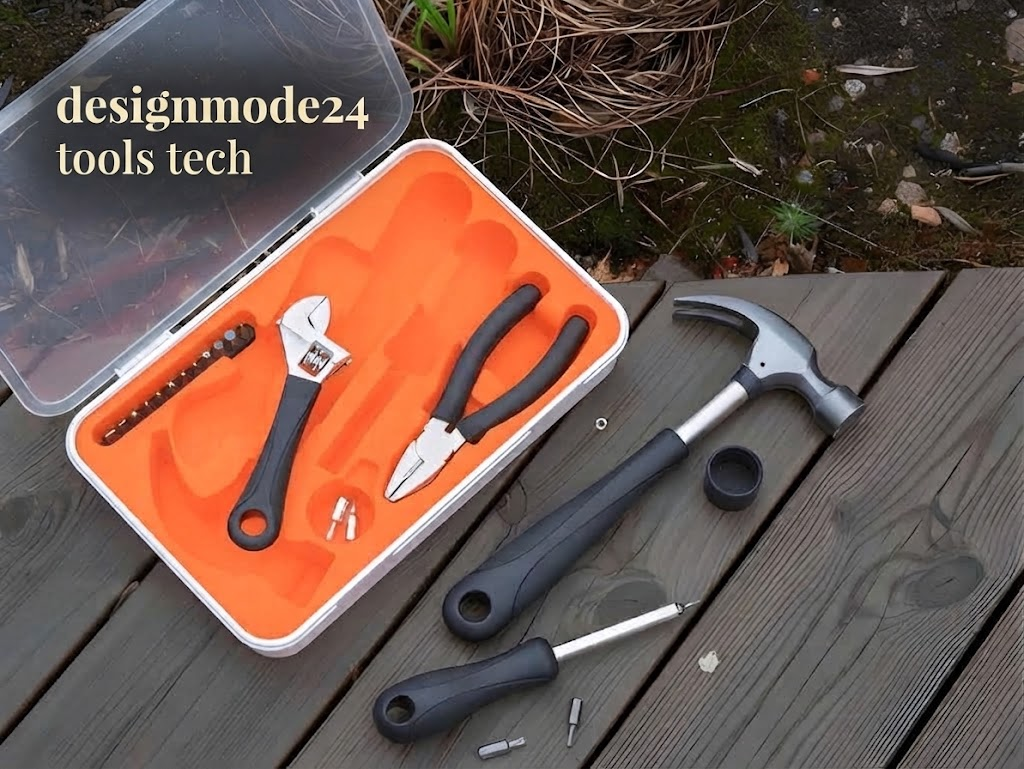
Tools tech refers to the category of hardware tools enhanced by digital technology, smart connectivity, or advanced materials designed to improve accuracy, safety, and efficiency for everyday home repair tasks.
This includes cordless power tools with brushless motors, laser and digital measuring devices, smart detection tools, and battery platform ecosystems. It does not include every gadget marketed as “smart” — a lot of that is feature bloat dressed up as innovation.
The honest distinction: tools tech that helps you work faster, safer, or more precisely is worth considering. Tools tech that just adds an app is usually not.
The Technologies That Actually Change How You Work
Brushless Motor Technology
This is the single most impactful advancement in cordless power tools over the last decade. Traditional brushed motors wear down and generate heat. Brushless motors use electronics to adjust power delivery based on the task — drilling through drywall uses less battery than driving a 3-inch screw into hardwood.
Why it matters for homeowners: You get longer battery life, less heat, and a tool that lasts significantly longer. A quality brushless drill will outperform a cheap brushed one at nearly every task.
Battery Platform Ecosystems
Every major tool brand — DeWalt, Milwaukee, Ryobi, Makita — now runs a shared battery platform. One battery family powers drills, circular saws, lights, vacuums, and more.
| Brand | Platform Name | Battery Voltages | Best For |
| DeWalt | FLEXVOLT / 20V MAX | 20V / 60V | Serious DIYers, pros |
| Milwaukee | M12 / M18 | 12V / 18V | Heavy home use |
| Ryobi | ONE+ / ONE+ HP | 18V / 40V | Budget-conscious homeowners |
| Makita | LXT / XGT | 18V / 40V | Long-term quality investment |
The rule: Pick one platform early and stick with it. Mixing brands means buying redundant batteries — the most expensive part of the tool.
Laser Measurement and Leveling Tools
Old bubble levels still work. But laser levels and digital distance measurers solve real problems that bubble levels can’t — like setting a perfectly level shelf across 12 feet or measuring a room’s square footage alone.
A laser distance measurer (around $30–$60 for a reliable one) replaces a tape measure for room measurements and gives you instant area calculations. Self-leveling laser levels ($50–$120) are genuinely useful for tile work, hanging artwork in a line, and installing cabinets.
This is tools tech that earns its place in a home toolkit.
Smart Detection Tools
Stud finders have improved considerably. Modern models use multi-sense technology to detect wood studs, metal pipes, AC wiring, and even moisture — all from the same pass across a wall.
| Detection Type | Why It Matters |
| Wood/metal studs | Anchor points for shelves, TVs, cabinets |
| Live AC wiring | Safety — avoid drilling into electrical |
| Metal pipes | Avoid plumbing disasters |
| Moisture | Identify hidden leaks before they become mold |
The Franklin Sensors ProSensor series and the Bosch GMS120 are widely regarded as the most reliable options for homeowners as of 2026. Both use multi-sensing arrays rather than single-point detection, which dramatically reduces false positives.
What to Skip (Overhyped Tools Tech)
Not everything marketed as smart tools tech is worth the premium.
App-connected drills: Unless you’re a contractor tracking torque settings across job sites, you don’t need a drill that talks to your phone. The app rarely adds anything meaningful for home repair.
“AI-powered” paint analyzers: Several devices now claim to match paint colors using AI. In practice, a $5 sample strip at your hardware store is more accurate and costs nothing after the first time.
Bluetooth tape measures: Useful for contractors who need to log measurements. For a homeowner replacing a faucet or building a bookcase, writing on your hand still works fine.
The honest test: if you can’t describe in one sentence how a tool’s technology makes a specific repair easier or safer, you probably don’t need it.
How to Build a Smart Home Repair Tool Kit
Think in tiers. You don’t need everything at once — you need the right thing for where you are now.
Tier 1 — First-time homeowner (under $300 total)
- 20V brushless drill/driver combo
- Multi-bit screwdriver set
- Quality hammer (16 oz. with fiberglass handle)
- Multi-sensing stud finder
- 25-ft tape measure
Tier 2 — Regular DIYer (adds $300–$600)
- Circular saw (stay on your battery platform)
- Oscillating multi-tool (the most versatile tool in home repair)
- Laser distance measurer
- Random orbital sander
Tier 3 — Serious home projects (adds $400–$800)
- Miter saw for trim and framing
- Self-leveling laser level
- Shop vacuum (battery or corded)
- Impact driver (different from a drill — learn the difference before buying)
For curated tool picks and home improvement guides built around real project needs, www designmode24 covers the intersection of design and practical home upgrades in a way most hardware-focused sites don’t.
Common Questions About Tools Tech for Home Repairs
What tools tech do I actually need for basic home repairs? For 80% of home repairs — hanging things, patching walls, fixing fixtures, basic carpentry — you need a brushless drill, a set of hand tools, a stud finder, and a reliable tape measure. Everything else is situational.
Is cordless always better than corded? Not always. Corded tools deliver consistent power without battery concerns, which matters for long tasks like extended sanding or cutting thick lumber. For most homeowners, cordless is more convenient. For sustained heavy use, corded still wins on value.
How long do lithium-ion tool batteries last? Most quality lithium-ion batteries hold useful capacity for 3–5 years under normal homeowner use, or roughly 400–600 full charge cycles. Store them at room temperature, partially charged, to extend life.
Do I need different tools for different home repair types? Yes. Plumbing repairs need basin wrenches and pipe cutters that no power tool replaces. Electrical work needs a non-contact voltage tester and wire stripper. Framing needs a miter saw. Match tools to the actual job, not to what looks impressive in the store.
Final Thought
Tools tech is only as useful as the person using it. The best cordless drill in your hands is worse than an average drill in the hands of someone who’s actually used one before. Start with less, learn the tools you have, then upgrade when a real project demands it.
The homeowners who struggle aren’t the ones with basic tools. They’re the ones with expensive tools they don’t understand and a garage full of solutions looking for problems.