 Jessica
You can usually spot a Mediterranean room from the doorway. The walls have a slightly uneven, chalky finish. The floor is cool terracotta or stone. Shutters are half open, and the light falling across the room is warm and soft. Nothing looks new, and yet everything looks right. So what makes Mediterranean interiors instantly recognizable?
The look comes from climate more than fashion. Thick walls, small windows, and hard floors were built to keep heat out, and the colors, textures, and furniture grew around those needs. This article explains the main signals that define the style and how to bring them into an ordinary home. You will find a quick answer, a table of defining features, a color guide by region, a materials chart, a layout guide, and the mistakes that make the style look like a theme restaurant. It suits apartments and houses, and you do not need a villa or a sea view. Read the quick answer first, then use the sections that fit your home.
What Makes Mediterranean Interiors Recognizable?
Mediterranean interiors are recognizable because of textured plaster walls, terracotta or stone floors, warm earthy colors, arched openings, handmade ceramics, and natural materials like wood, wrought iron, and linen. Furniture is sturdy and unfussy, light is filtered, and the rooms feel connected to the outdoors.
The Defining Features at a Glance
| Feature | What it looks like | Why it exists |
|---|---|---|
| Plaster walls | Matte, slightly uneven, often limewashed | Reflect heat, hide imperfections |
| Hard floors | Terracotta, stone, patterned tile | Stay cool underfoot |
| Arches | Rounded doors, niches, windows | Strong, traditional structure |
| Exposed beams | Dark timber across the ceiling | Structural roof support |
| Shutters | Wood slats, painted or natural | Control sun and airflow |
| Wrought iron | Rails, lamps, curtain rods | Durable, locally made |
Color Palettes by Region
Not every Mediterranean room looks the same. Color changes with the coast, so pick one region and stay with it.
| Region | Main colors | Accent colors | Mood |
|---|---|---|---|
| Greek islands | Whitewash, deep blue | Terracotta pots | Bright, clean |
| Tuscany and Italy | Ochre, cream, olive | Burgundy, brown | Warm, rustic |
| Spain and Portugal | Terracotta, sand | Cobalt tile, yellow | Sunny, bold |
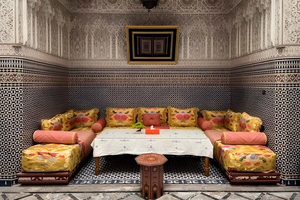
| Morocco and North Africa | Clay, saffron | Teal, deep red | Rich, layered |
| French Riviera | Soft blue, lavender | Pale yellow | Airy, relaxed |
Materials and Textures That Do the Work
Mediterranean interiors rely on texture instead of pattern. Surfaces look handmade and slightly worn, which is a large part of the appeal.
| Material | Where to use it | Care note |
|---|---|---|
| Limewash or plaster | Walls | Choose breathable, matte paint |
| Terracotta tile | Floors, kitchens | Seal to prevent stains |
| Natural stone | Counters, stairs | Wipe up acids quickly |
| Linen and cotton | Curtains, cushions | Wash gently, keep it relaxed |
| Rattan and cane | Chairs, lamps | Avoid constant damp |
| Glazed ceramics | Bowls, tiles, pots | Display, do not hide |
If you need tiles or ceramics in a particular region’s style, you can check out [anchor text] before choosing a palette.
How Mediterranean Interiors Use Light and Layout
Light is the unseen ingredient. Rooms are designed to catch it, soften it, and move it around. Windows are often small and deep, which creates a cool, shaded interior, while courtyards, doorways, and mirrors bounce brightness inside.
You can borrow these habits without renovating:
- Use sheer curtains. Linen sheers filter sunlight and soften edges.
- Choose warm bulbs. Around 2700K gives the glow of late afternoon.
- Add a mirror opposite a window. It doubles the light without glare.
- Keep furniture low and sturdy. Chunky wood tables and plain sofas suit the style.
- Link inside and outside. Place pots of olive, rosemary, or lavender near doors and windows.
A Simple One-Room Plan
Start with the walls and floor, since they carry the look. Paint in a matte, chalky finish in a warm white or sand tone. Add a rug in natural fiber, then a wood table with a few handmade bowls. Finish with one wrought-iron or woven light and a plant. Five changes are usually enough to shift the whole mood.
Mistakes That Make the Style Look Like a Theme
The most common mistake is overdoing symbols. A room covered in grapes, roosters, and faux rustic signs reads as a costume. Mediterranean interiors depend on restraint and honest materials. Another problem is gloss. Shiny paint, polished tile, and plastic plants flatten the effect, so choose matte and natural finishes. Mixing too many regions at once also confuses the look, because Greek blue and Moroccan red rarely belong in the same room. Finally, do not copy heavy dark furniture in a small, dim room. Keep colors light and let a few textured pieces carry the style.
FAQ
What colors define the style?
Warm whites, terracotta, ochre, olive, and deep blue, depending on the region.
Can I get the look in a small apartment?
Yes. Use matte paint, a woven rug, linen curtains, and a few ceramics.
Does it work in cold climates?
Yes, with warm lighting and layered textiles, though you may need to adjust window treatments for insulation.
Is it the same as rustic style?
They overlap, but Mediterranean interiors lean on sun-baked colors, plaster, and ceramics rather than heavy farmhouse wood.
Bottom Line
Mediterranean interiors are recognizable because they combine textured walls, hard floors, warm color, and filtered light with natural materials and handmade objects. Choose one region, keep finishes matte, and add a few honest textures. A few well-chosen elements do far more than a room full of symbols.
Must visit https://designmode24.co/ for mediterranean interior ideas.