 Jessica
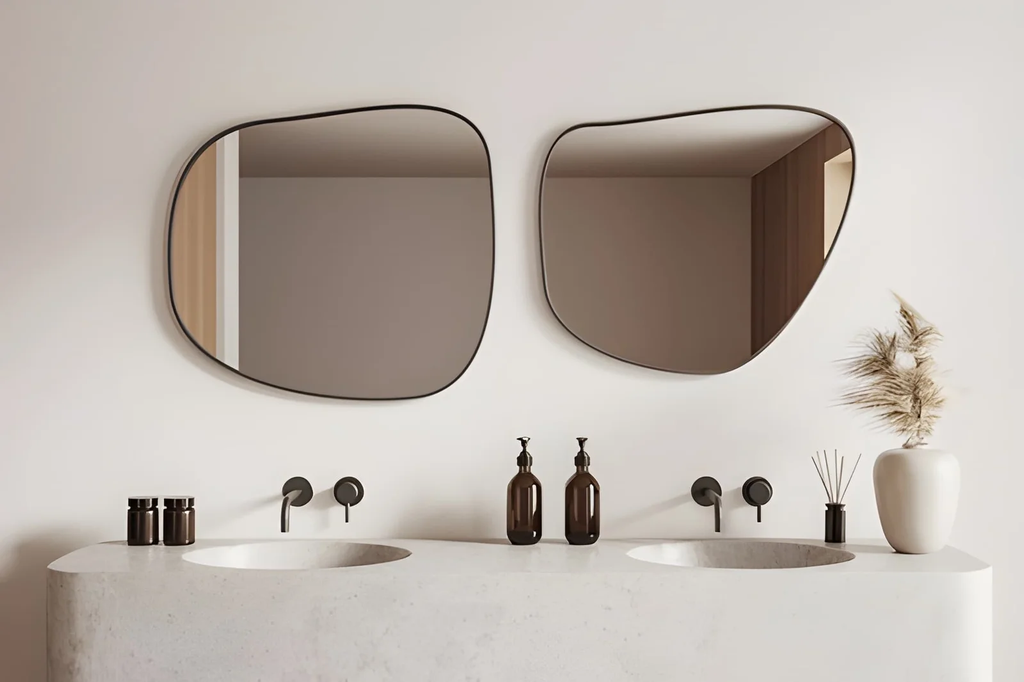
A mirror can do something paint and furniture cannot: it changes the shape of a room without touching a wall. Put one at the end of a narrow hall and the hall seems to continue. Set one opposite a window and a dark corner picks up daylight. Designers know this, and they treat mirrors as a building material as much as a decoration. So how do interior designers use mirrors to shape architectural spaces?
They start with what the room needs, whether that is more light, more width, more height, or a stronger focal point, and then they choose the size, position, and angle to match. Placed badly, the same mirror shows a pile of laundry and a bare wall. This article explains the method. You will find a quick answer, a table of mirror jobs, a placement guide, a size chart, a style and safety section, a planning checklist, and the mistakes that waste a good mirror. It suits apartments, hallways, and large open rooms. Read the quick answer first, then use the sections that fit your space.
How Do Interior Designers Use Mirrors to Shape Architectural Spaces?
Interior designers use mirrors to shape architectural spaces by reflecting light, extending sightlines, and framing views. They place mirrors opposite windows to spread daylight, at the end of corridors to add depth, and on narrow walls to widen a room. The mirror’s size, angle, and reflected view decide the result.
What Mirrors Can Change in a Room
| Goal | Mirror strategy | Typical location |
|---|---|---|
| More light | Reflect a window or lamp | Opposite or beside a window |
| Wider feel | Large mirror on the long wall | Narrow living room |
| Deeper feel | Mirror at the end of a view | Hallway or dining end wall |
| Taller feel | Tall, floor-length mirror | Low-ceiling rooms |
| Focal point | Statement frame | Above a console or fireplace |
| Hidden awkwardness | Reflect a better view | Corners, pillars, bulky columns |
Placement: What the Mirror Sees Matters Most
A mirror shows whatever sits in front of it, so the reflected view is the real design decision.
| Reflected view | Result | Better choice |
|---|---|---|
| Window or garden | Doubles daylight and greenery | Ideal |
| Art or lamp | Adds depth and glow | Good |
| Bed or clutter | Looks messy | Move the mirror |
| Blank wall | Little benefit | Add art or choose another spot |
| Front door | Can bounce light into hall | Check what it shows |
Before fixing a mirror, hold it in place and look at it from the places people usually stand and sit. Walk through the room, then check again from the doorway. If you want mirror frames or glass finishes to compare, you can browse [anchor text] before you decide on a shape.
Size and Height Guide
These are common planning guidelines, so adjust for your room and furniture.
| Situation | Typical guideline |
|---|---|
| Mirror over a console | About two thirds the width of the console |
| Mirror over a sofa | Roughly two thirds the width of the sofa |
| Center height | Near eye level, around 57 inches |
| Floor-length mirror | Leaned or fixed, about 60 inches tall or more |
| Gap above furniture | A few inches so the two read as a group |
| Entry mirror | Wide enough to see your upper body |
Larger mirrors usually give a stronger effect than several small ones. A cluster of tiny mirrors can look busy and reflect little.
Shape, Frame, and Finish
| Shape | Effect | Good for |
|---|---|---|
| Round | Softens straight lines | Entry, above a console |
| Arched | Adds height and elegance | Hall, bedroom |
| Rectangular | Clean, simple | Most rooms |
| Frameless | Seems to expand the wall | Small spaces |
| Antique or aged glass | Soft, moody reflection | Dining rooms, lounges |
Frames should repeat a material already in the room, such as brass, black metal, or wood. Antique glass diffuses light and hides harshness, while clear glass reflects crisply.
Safety and Practical Checks
Use proper fixings for the wall type and mirror weight, and have a heavy mirror fitted by a qualified person. Keep large mirrors away from the heat and steam of cookers where silvering can fail. Avoid placing a mirror opposite a bed head if reflections bother you at night. Large leaning mirrors should be anchored so they cannot tip. Check any reflective glare from sun, since a mirror can direct strong light into eyes or onto surfaces.
Planning Checklist
- Name the goal. Light, width, depth, height, or focus.
- Stand in the room. Note where people look and sit.
- Test positions. Hold the mirror or a large cardboard template.
- Check the reflection. Make sure it shows something worth doubling.
- Choose size first, then frame. Scale matters more than style.
- Fix it safely. Use correct wall fixings.
Mistakes That Waste a Mirror
The most common mistake is hanging a mirror because a wall looks bare, without checking what it reflects. Another is choosing a mirror that is too small for the wall, so it looks lost. Hanging it too high is a third error, as the center should sit near eye level. Too many mirrors in one room can feel disorienting, so use one or two. Finally, avoid pointing a mirror straight at a window without shading in strong sun, since glare can be harsh.
FAQ
Do mirrors really make a room look bigger?
They add the impression of depth and light, though they do not change the actual size.
Where should I not put a mirror?
Facing clutter, a cluttered bed area, or a strong light source that causes glare.
What size mirror suits a small room?
Often one larger mirror works better than several small ones.
Can I hang a heavy mirror myself?
Only if you use fixings rated for the weight and wall type. Otherwise, ask a professional.
Bottom Line
Interior designers use mirrors to shape architectural spaces by reflecting light, extending views, and framing focal points. Choose the goal first, check the reflected view, size the mirror generously, and fix it safely. A single well-placed mirror can change how a whole room feels.
For architectural spaces mirrors ideas must visit https://designmode24.co/